
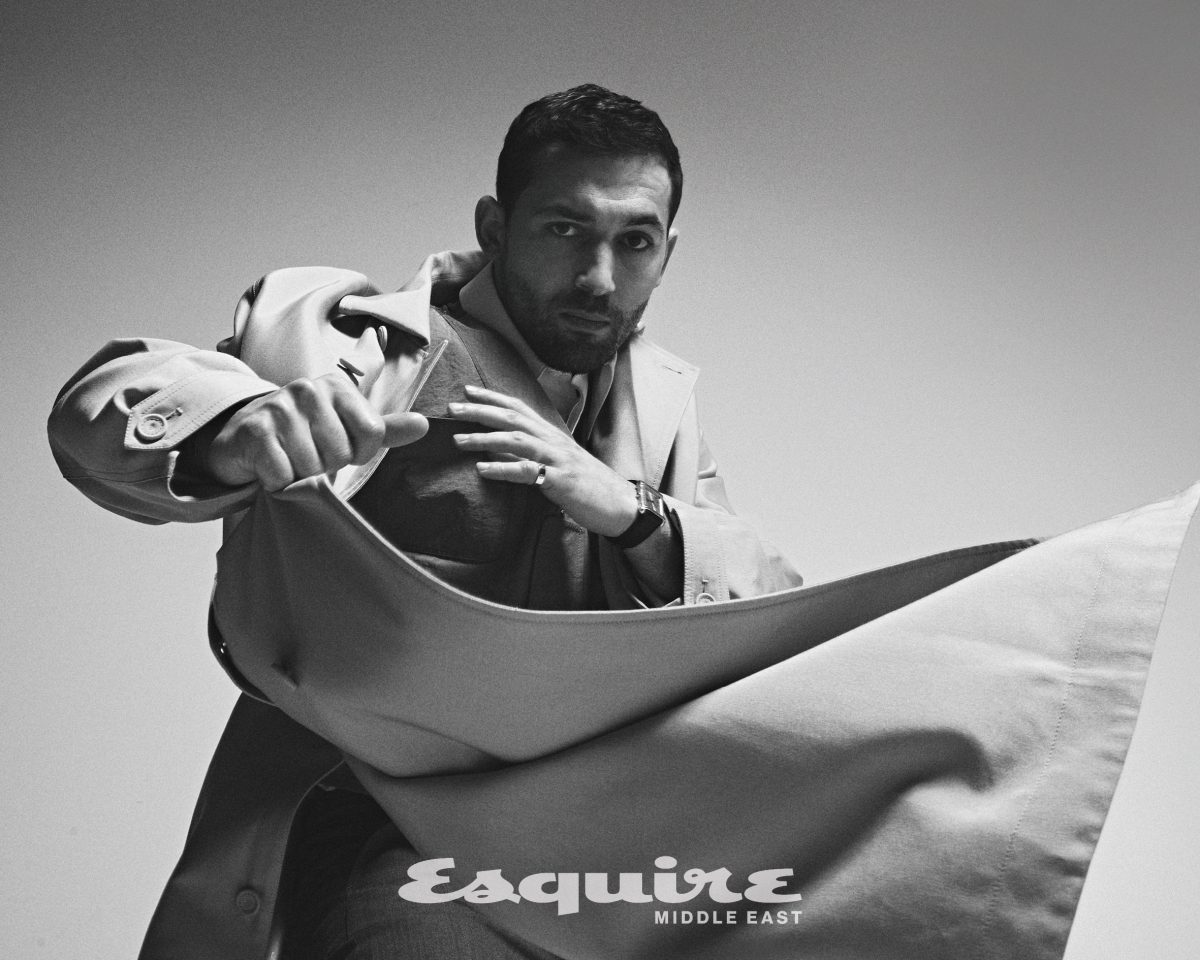

PHOTOGRAPHY BY ARNO LAM
FASHION & STYLING BY SARAH CAZENEUVE
It’s a funny business writing a magazine profile. You’re in a person’s life for an hour or two, you try to understand as much about them as you can. Then you both move on to the next thing. It can be transactional, cold. In the best instances, it’s fun while it lasts. Sometimes, you’re even proud of what you end up writing. In rare instances it amounts to a human connection.
When I chatted with Dali Benssalah in 2020 ahead of the much-delayed release of Bond outing No Time to Die – where he played a murderous henchman – it was one of those rare occasions where a connection happened. We agreed we’d have coffee the next time I was in Paris. Instead, a few months later, I was in Beirut when the Port Explosion happened. It was a moment of pure confusion and utter terror. The very first name to come up on my WhatsApp to ask if my family and I were was Benssalah. That’s the kind of guy he is. His sincerity in the interview wasn’t put on – he’s connected to his humanity at a root level.
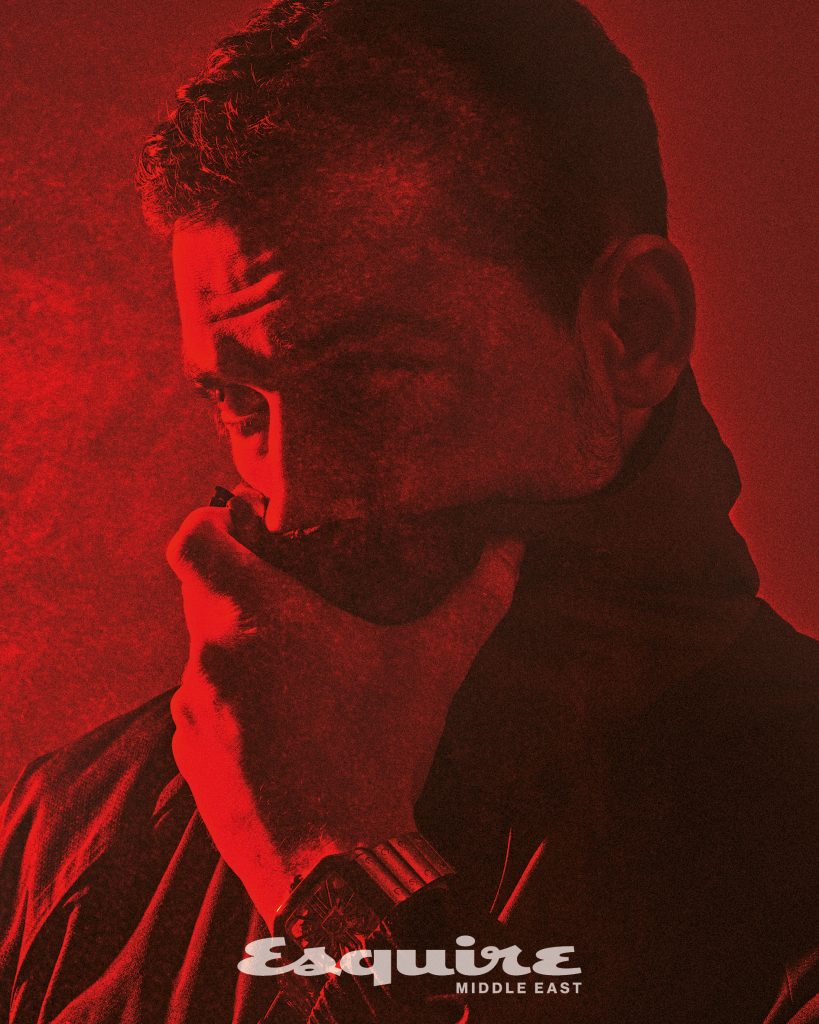
Rubber Strap, by Cartier
Alpine BLS jacket, by BLS Hafnia
It’s a quality that makes him impossible to look away from on whatever screen he’s on. He probably first popped up on your radar for his primal – and silent – performance in a music video, The Blaze’s “Territory”. The signs were all there. His ability to flit between vulnerability and rage. There’s something virtuosic about it. Like watching a Jazz musician improvise. And he’s about as cool as one too – both brooding and friendly.
Since 2020, Benssalah has featured in eight film and TV projects. Last year he was in Romain Gavras’ kinetic Athena on Netflix where he plays the brother of a victim of police brutality who copes with the escalating fallout in his community. His two most recent films show the breadth of his range – Adila Bendimerad and Damien Ounouri’s Algerian period drama The Last Queen and Jeanne Herry’s poignant restorative justice-themed Je Verrais Toujours Vos Visages.
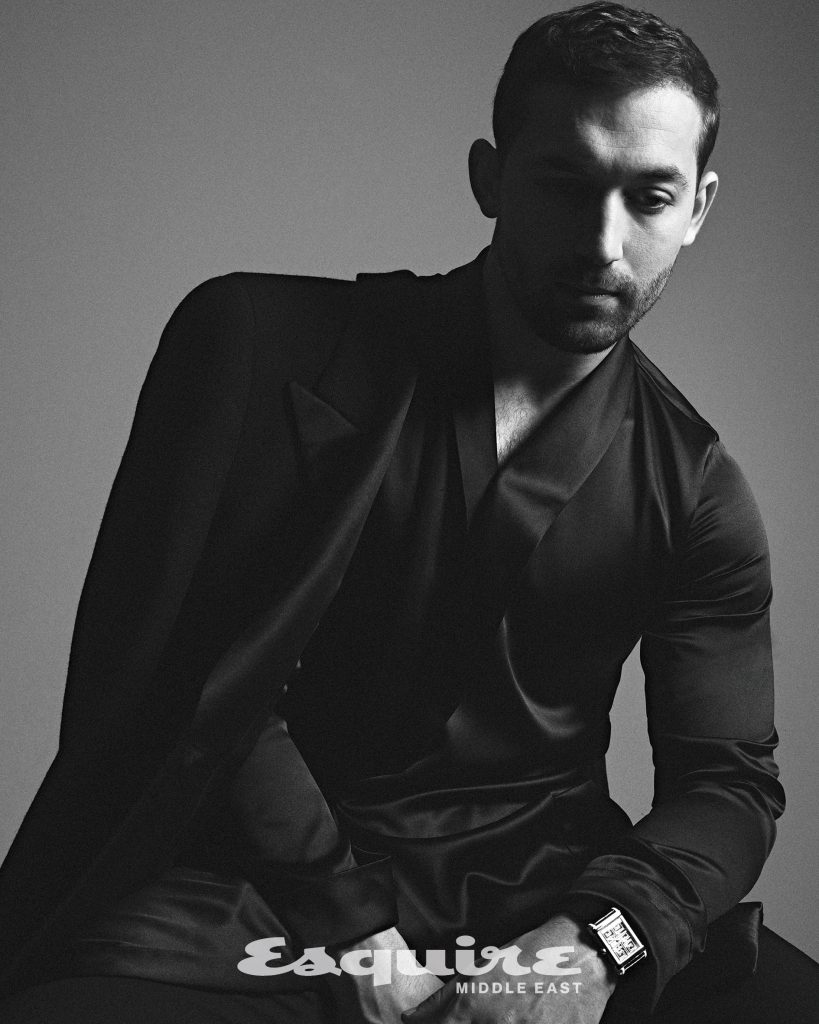
Silk Satin Shirt, Shawl Collar Wool Jacket in Grain de Poudre Wool, Chino Pants in Raw Stretch Gabardine, all by Saint Laurent
“There have been some beautiful projects since we last spoke. I’ve been lucky enough to have a series of really great projects,” says Benssalah. ”I just follow my passion. From small budget, independent film, to big, demanding international Netflix productions, to something really intimate and writerly like Je Verrais Toujours Vos Visages.”
His roles demand a lot of him. Physicality – which as a former Thai boxing champion is a walk in the park – but also emotional extremes. In many of his roles he goes from tender to rage-filled in front of your eyes. It must take an emotional toll.
“It can be difficult. But to be honest, it’s what I’m looking for” says Benssalah. “I need to be engaged. And if that engagement with the material is physical, even better. When we were shooting Athena, the role was very physical. Before even getting to set, I’d exhaust myself at the gym. I wanted my starting point to be exhaustion,” he admits. “That’s how I felt I’d embody the character’s eventual physical depletion. I find working through physicality is a form of liberation. Once the body is exhausted, you’re not left with much. You don’t have a lot of brainpower left to ask yourself a thousand questions about how to play a scene – you just do it.”
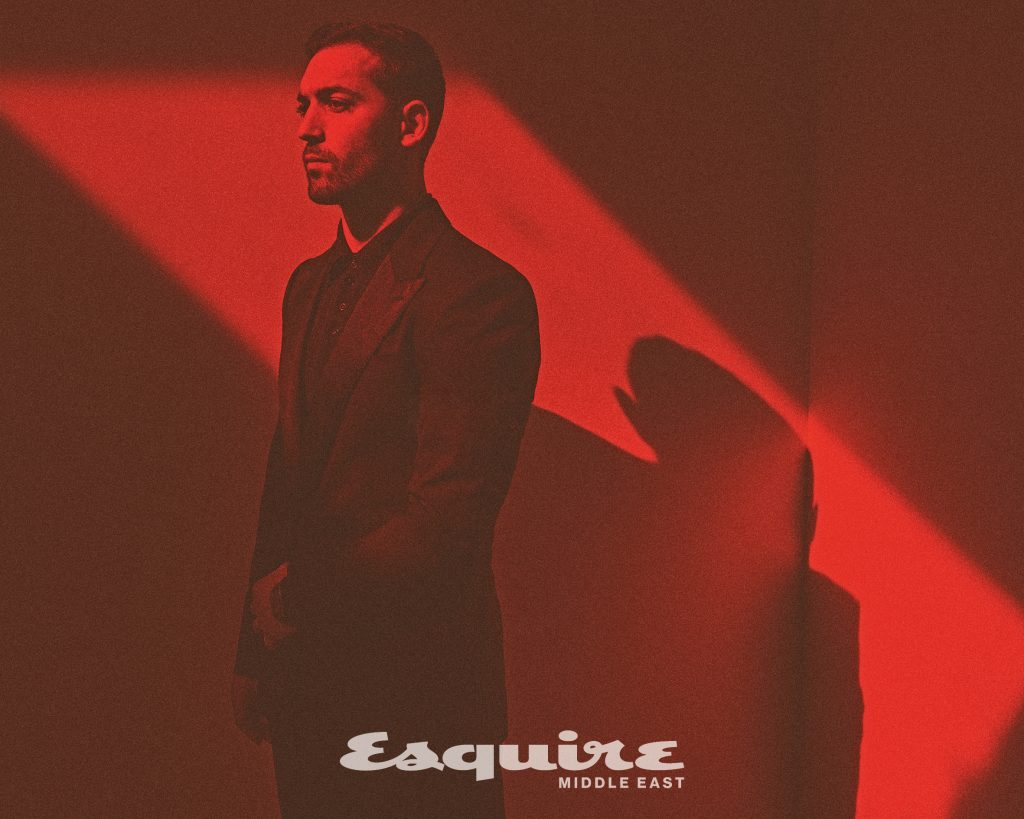
Single breasted wool and silk-trimmed tuxedo jacket, by Dolce&Gabbana. Striped silk shirt, by Saint Laurent. Straight-leg tailored trousers, by Jacquemus
In 2023, it feels like everyone in the film and television industry has their whole career mapped out – from press to Hot Ones appearances. Refreshingly, Benssalah isn’t in a rush to create a roadmap to his career. He goes from project to project with only his taste and principles as a guiding force. Hollywood blockbuster, Algerian independent film, Sundance festival darling. He’s agnostic about the projects. I wonder if that will change now that he’s joined the roster at UTA – the major talent management agency in Hollywood. Americans do things differently. “I’m not sure how it’ll play out,” admits Benssalah. “They aren’t pressuring me. Just giving me more options. I see it as me opening up to the world. Opening up to more opportunities in cinema. It adds things to consider. I don’t feel it’ll force me to do projects Stateside. For me the criteria is always that a project has to have meaning, have a passionate director, the role has to correspond to something I can defend, those are my criteria.”
He seems committed to continuing to cover a lot of ground when it comes to his projects. “Later this year I’m shooting in Algeria again, on a small production,“ says Benssalah. He’s made it clear to his American agents that projects like that will remain important to him – he feels invested in supporting Algeria’s fledgling film industry. “I don’t want to be the flagbearer for Algerian cinema, but it’s in crisis. It needs to have a light shone on it.” He’s particularly proud of his work on The Last Queen, where he takes on the role of Pirate Barbarossa. “It was actually delayed by covid, which gave us much more time to prepare and get it right. We’re all very proud of it.” Benssalah’s co-star Adila Benimerad (who also co-directed and co-wrote the film) took home Best Actress at the Red Sea Film Festival and the film itself was nominated both there and at the Venice Film Festival. “The role meant I had a lot of work to do on language. I knew a bit of Arabic but I speak Kabyle. I had to learn to embody the character. The character is also 15 years older than me, so I had to find something in my body too. I had to figure out how he breathes. How he holds himself,” says Benssalah with a touch of pride.
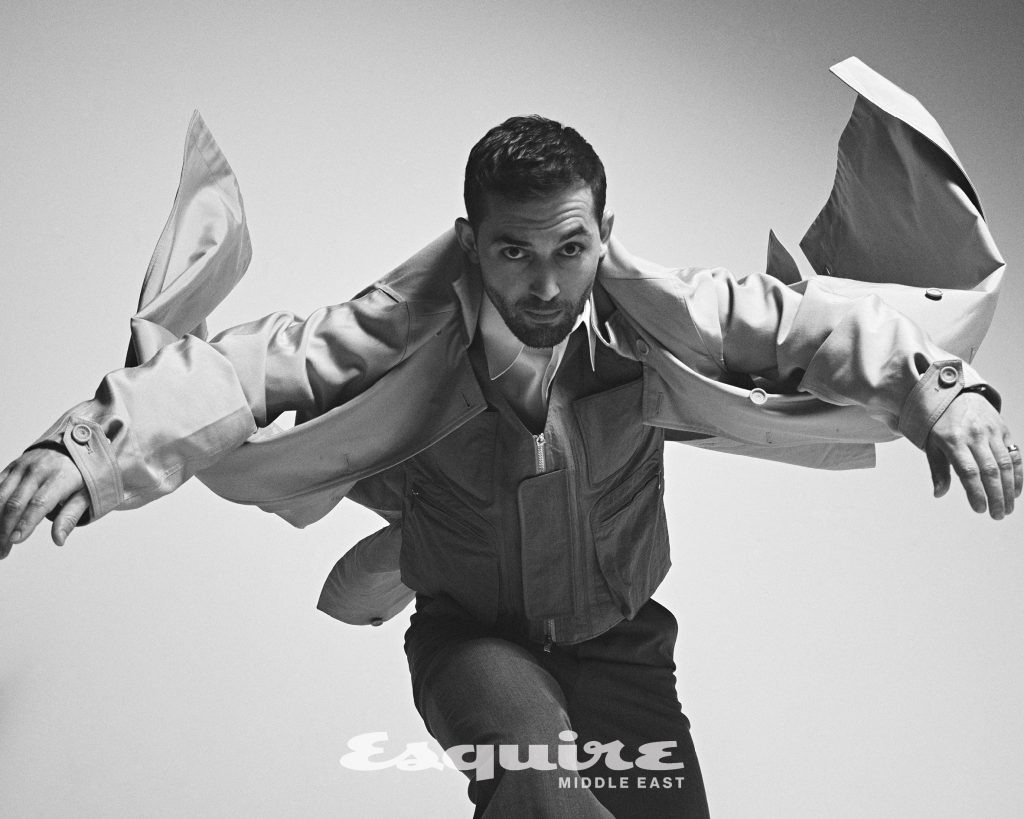
Cotton trench coat, Multi-pocket cargo vest, both by Dior. Cotton poplin martini-fit shirt, by Dolce&Gabbana. Wool blend trousers, by Acne Studios
The film was a challenge to make, between budget constraints and covid delays. “It was very artisanal. Everyone was really invested personally because the budget was tight. We were all in the same boat trying to navigate a period piece on a shoestring,” says Bensallah. “But filming in Algeria was special to me. I think if it was anywhere else, I might have found the conditions exhausting. But being in Algeria, it felt almost like I was making up for lost time,” he says wistfully. “It felt intimate. I felt connected to my roots. Especially that we were telling an untold story about Algeria that takes place long before colonisation. There was something in the air on that set. Peaceful.”
Given the growth of Benssalah’s career, there are things he’ll have to give up – or at the very least pause. He talks about a theater project that he had to turn down because it clashed with his filming schedule. He says it with a sense of grief. As if he understands this might be an art form he has to step away from for the moment, even though it means a lot to him. He plans to come back to it once he gets big enough that his film career won’t suffer if he takes time out to do a play. Or big enough to have a production accommodate him getting on stage every night for months. It’s indicative of how he sees his growth. He’s chasing passion projects and looking to grow internationally, with the intention of being always able to do more of what he truly loves.
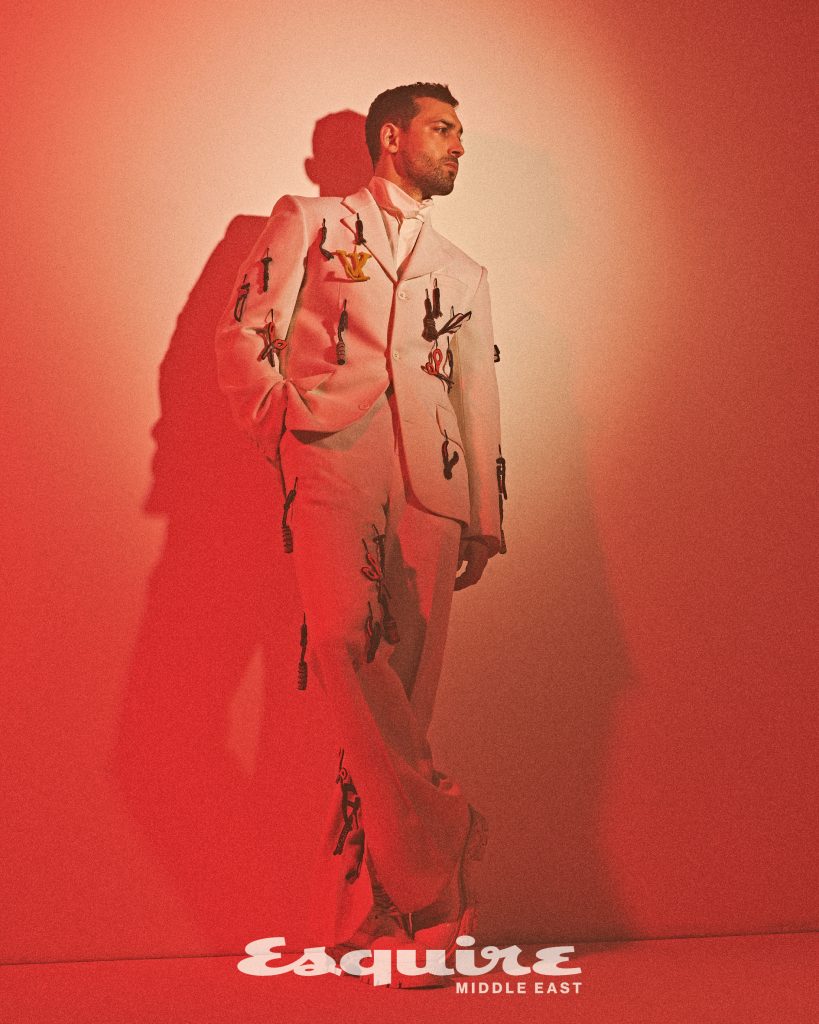
I ask him if there’s a role he hasn’t be offered yet that he dreams of. “That’s a good question, because I’m simultaneously waiting and impatient. I’m waiting for something I can’t quite put my finger on. I’m waiting for a beautiful surprise,” he says. “It could be the story of a Syrian refugee or an adaptation of Richard III. I’m waiting for a role that demands of me an engagement I haven’t experienced yet. In my mind, physically. To feel from page one that there is absolutely no comfort zone. I like getting so deep that I surprise people – directors, audiences.”
It sounds intense. It’s a quality in Benssalah that makes him magnetic. Even over a Zoom call. I wonder if this intensity, this ability to flip personalities is rooted in him and if we should be worried.
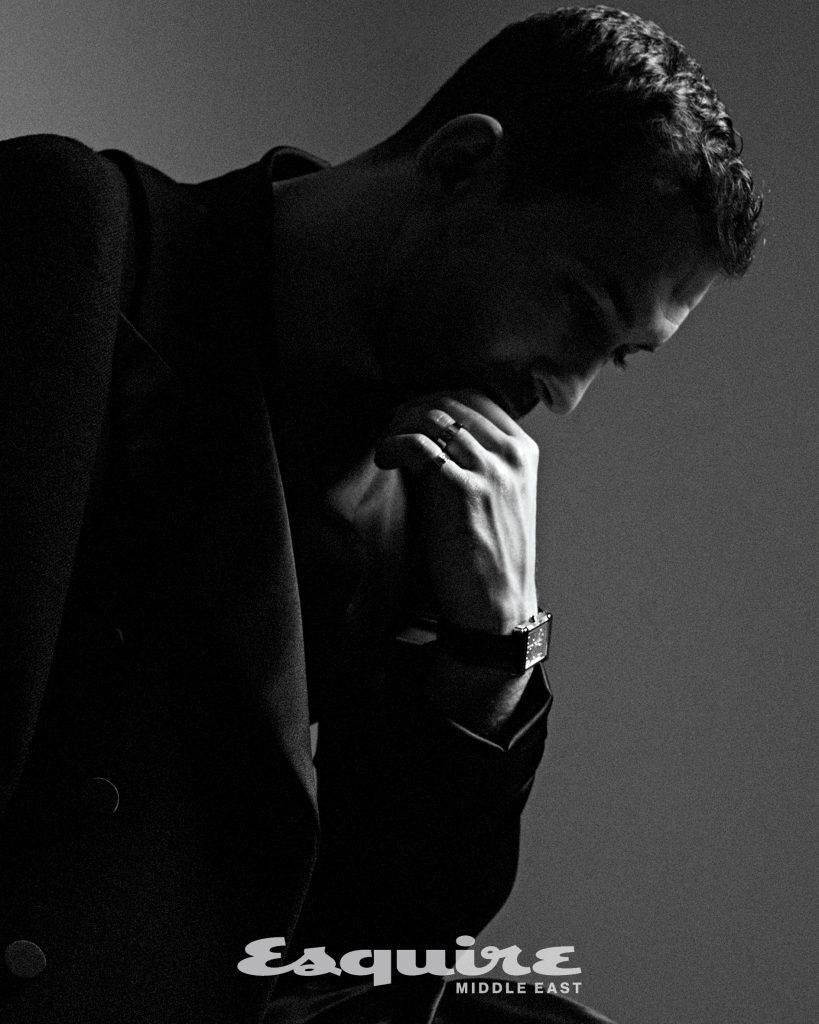
Silk Satin Shirt, Shawl Collar Wool Jacket in Grain de Poudre Wool, Chino Pants in Raw Stretch Gabardine, all by Saint Laurent
“Absolutely. We start with ourselves, always. We discover a story, we embody a role, but at the end of the day you can’t invent everything. You always start with yourself. I inject myself into all my roles. Thankfully I’m not really like that in real life. I’m civilized!” he adds with a laugh.
Next, he’s headed to prestige television, alongside Josh Charles (The Good Wife, We Own This City) and Elizabeth Moss (Mad Men, The Handmaid’s Tale) in Hulu/FX’s The Veil which is currently filming in Paris. It’s the kind that could turn him into a household name. He seems almost starstruck when he mentions how recognized Elizabeth Moss is when she’s walking around Paris. The thing is, millions of people already know who Dali Benssalah is. When a few million more figure it out, the face of film and television will be changed forever. And it will be better for it.
See Dali Benssalah on the cover of Esquire Middle East’s April issue on newsstands now

Single breasted wool and silk-trimmed tuxedo jacket, by Dolce&Gabbana. Striped silk
shirt, by Saint Laurent. Straight-leg tailored trousers, by Jacquemus