


Colours are important to kids. Very important. If I ask my daughter what any of her friends or family’s favourite colours are, she will answer the question without a beat of hesitation, as if I had asked her what the weather is outside. Her nonna’s is yellow; her mother’s is orange; her friend Freia’s is pink; Holly’s is purple; Hughie’s is red-and-blue (because of Spiderman, natch).
As children grow they are constantly trying to make sense of the world around them and the nuances of human interaction. They are infantilized by colours because they are very visceral and easily can differentiate between then. For kids, colours are important because they showcase opinion, and in several cases, opinion-as-fact. As any parent knows, once you pick a favourite colour, you’re stuck with it.
For me it is pink. Since my daughter was old enough to understand the concept of colour, I’ve told her that I like pink. Full disclosure: it’s not really my favourite. It’s red.
The reason I chose to tell my kid that my favourite colour is pink was to show, on a very basic level, that there are no gendered colours. When other kids (probably boys) tell her that “only girls like pink”, she is now equipped with the ammo to retort that her dad does. The same goes with long hair (which both her and I have, often in a ponytail), and liking the more fringe characters in the current cartoon-obsession – yes, I’m a Zuma from Paw Patrol kinda guy.
When I first found out that I was going to be raising a girl, I became instantly afraid of the built-in gender bias that her life would come with. To be honest, as a white, privileged male, it was the first-time that I took a proper vested interest in it. I was totally out of my depth. It was terrifying. It was humbling.
Being a father to female child is not simply a delight, it’s also an empirical fact that it comes with constant jolts of self-improvement. A 2018 study by the London School of Economics found that men were less likely to hold sexist attitudes if they had a school-aged daughter. The authors argued that through parenting, fathers of daughters tend to develop a better understanding of women’s and girls’ disadvantages in society, resulting in a significant shift in their attitudes towards gender norms.
This was underlined by another study in the US, published earlier this year, which looked how often men interrupt their female colleagues in the work-place (notably in government), and correlated the results with whether they were a parent of a daughter or not. You can probably guess what the results where.
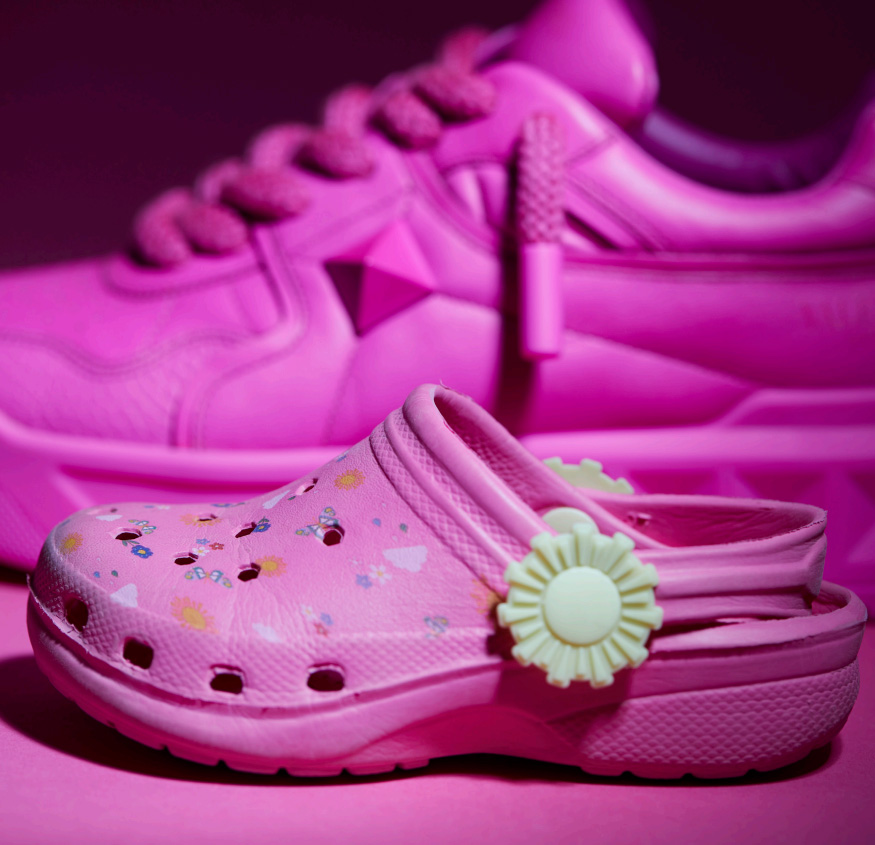
As a colour, pink is arguably the most volatile. Politically laced for nearly a century, it has represented Feminism, Communism and breast cancer awareness. It has been labelled both damagingly restrictive and progressively empowering. It has been the both colour of Malibu Barbie’s convertible, and of Racing Point’s Formula One car. It is the colour of bubblegum and perfectly cooked meat.
If kids identify others by what colour is their favourite, then telling my daughter that I like pink is a way of saying that I don’t conform, and that is okay. As a friend of mine once wrote, pink is punk.
For the record, my daughter’s favourite colour changes. When I ask her why that was, she explains that she likes to hear everyone else’s answers first before deciding because she doesn’t want some colours to feel left out. Ultimately, whether the question is about what something looks like or the subtext about something completely different, the fact remains that colours are important.
Matthew Baxter-Priest is a dad-of-daughter and Editorial Director of Esquire GCC.
Follow him @mrpeaker