
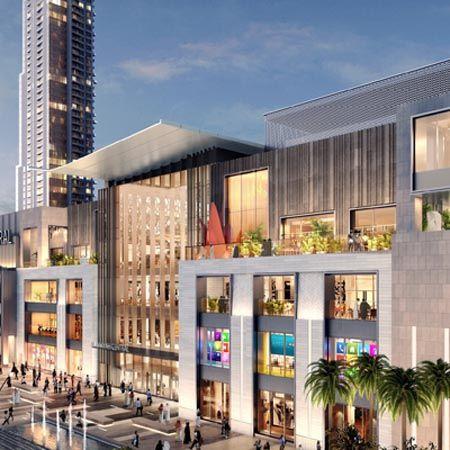

Kenneth A. Himmel has spent the last 35 years working on some of America’s most prestigious projects. His list of achievements include New York’s Time Warner Center, CityPlace in Palm Beach Florida, and is currently the driving force behind the Hudson Yards development — the largest private real estate project in US history. Yet the project he says he is most proud of is a little closer to home. As President and CEO of Related Urban and Co-Managing Partner of Gulf Related — a joint venture between [American retail giant] Related Companies and the UAE alternative asset management and investment firm, Gulf Capital; — Himmel is masterplanning Abu Dhabi’s Al Maryah Central. It is, he says over the phone from New York, “a phenomenal project that is tremendously underrated. By the time the next phase of the Al Maryah is done, I believe it will be one of the top five projects in the world.
It’s a bold statement to make, especially in a country that has seen the development of the world’s tallest building, monumental manmade islands and the development of the planet’s most modern airports, ports and energy installations. Nevertheless, it’s not a claim without substance. The 15 million sqft of the centrally based Al Maryah Island already includes The Galleria luxury mall, Rosewood Abu Dhabi hotel and a 500-bed Cleveland Clinic, which in itself is a game-changer for healthcare in the region.
The impressive next phase that Himmel is currently working on will see the development of another shopping and entertainment complex — Al Maryah Central — and two 400,000 sqft integrated towers (set for completion by 2019) one with a hotel and serviced apartments and the other with luxury residences.
Himmel confidently predicts that all of this will open for business on March 1, 2018. That’s a bold promise to make, but opening all 1.7 million sqft of the next phase simultaneously doesn’t seem to worry him. “The only way you can open mixed-use projects successfully is to do so at the same time,” he explains. “You only get one chance to make a first impression, and it is better to do that right.”
According to reports from retail companies such as Al Tayer, more than 20 million customers per year are predicted to visit Al Maryah Island’s shopping centres. That figure seems curious at first glance, given the relatively small population of Abu Dhabi, and the reputation of its limelight-hogging neighbour, Dubai. With the enormous success of The Dubai Mall and Mall of the Emirates, which have each become world-renowned tourist attractions in their own right, the burning question is: does the UAE need another mega mall? According to Himmel the answer is a resounding yes.

“Unlike any other part of the world, shopping centres here are a significant social experience,” he explains. “People in the US will go to a shopping centre once every couple of weeks, whereas here it is more like two to three times per week, each time spending on average five hours there. Before places like The Galleria and Yas Mall opened up, people in Abu Dhabi would travel to Dubai on the weekends,” he continues. “We want to offer young people, families and wealthy shoppers the same kind of experience without them having to drive for over an hour to get it.”
With ample retail investment in the project, via the likes of Mubadala, the Chalhoub Group, Al Tayer and Richemont, there is little to suggest that the development has not been carefully considered. Al Tayer alone will deliver the second Bloomingdale’s and first Macy’s outside the US, both of which are bold statements of intent. “Analysis of the current market makes us feel that it can support retail,” Himmel says.
He explains how this “new generation project”, which includes cinemas, leisure and lifestyle facilities located on top of the centre’s car parks, will appeal to young people in Abu Dhabi. As in other markets across the world, the youth demographic is increasingly looking for these types of facilities. “They are more interested in sports, recreation and health,” says Himmel who has observed similar trends in cities like New York. “They are interested in outdoor spaces, especially restaurants, even in an urban environment.”
On a logistical note, anyone who has been stuck in Salam Street’s rush hour traffic will tell you that accessibility to Abu Dhabi’s increasingly busy centre is a very real concern. Due to the central location of Al Maryah Island, access in and around the island has been given paramount importance. The current construction of a series of bridges will better connect the area and create several access routes to the projects.
“Unlike any other part of the world, shopping centres [in the Gulf] are a significant social experience”
One thing is clear to see: it is this combination of creative challenges and the enormity of the project that enticed Himmel. The chance to develop a forward-thinking, urban section of Abu Dhabi that will drive and develop the capital as a whole is not easy to pass up. “The beauty of the work in Abu Dhabi is that the city’s infrastructure was already in place, so the work was more to do with filling a hole,” he says. “What we want to do is not just fill that hole, but take it to another level entirely. Working on a blank canvas like this carries with it a different kind of responsibility; a responsibility of doing it right.”

Shaping the future of a metropolis is a weighty responsibility, and one which will impact multiple generations to come, but Himmel seems uncowed. “The best testament is all the projects we’ve built over the last 30 years,” he explains. “Almost every one of them is still at the top of its market, in every city we’ve built on. You learn from each project, and hopefully live long enough to keep on doing them.”
The UAE’s capital, it would seem, is in safe hands.