
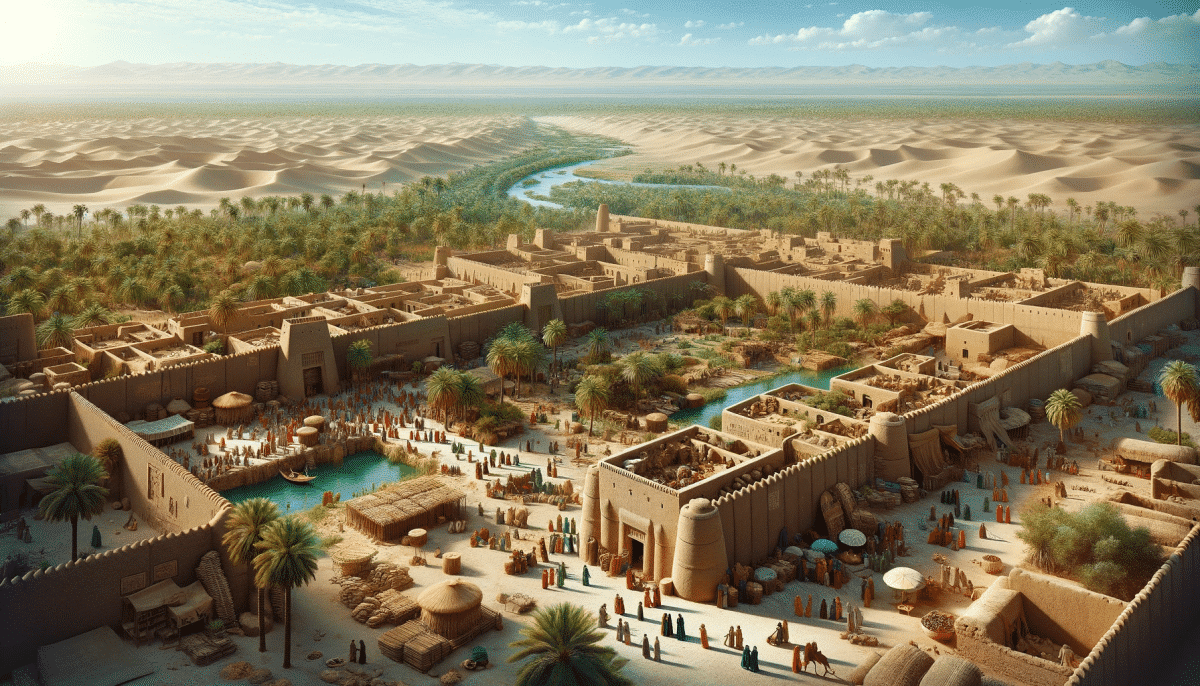

Archaeologists have found a monumental 4,000-year-old walled oasis in Saudi Arabia, that offers new insights into pre-Islamic life.
The groundbreaking discovery throws light on the Bronze Age, with archaeologists finding a colossal walled oasis in the heart of the North Arabian Desert. The walls date back to a time when the now-barren sands teemed with life and activity.
The Khaybar Oasis is a massive structure dating back to between 2250 and 1950 BCE. Once spanning a staggering 14.5 kilometers (9 miles), the Khaybar fortifications are among the two largest of their kind in Saudi Arabia.
This ancient site, now partially eroded by the relentless passage of time, once boasted walls up to 5 meters (16 feet) high and nearly 2.4 meters (7.9 feet) thick, encircling an area of about 1,100 hectares (2,700 acres).

How has this architectural giant lay hidden for so long? The landscape’s dramatic transformation over four millennia.
The discovery offers a rare glimpse into the lives of those who called the oasis home. These ancient builders, believed to be indigenous populations, not only settled in this once-lush area but also went to great lengths to protect and demarcate their territory.

Khaybar’s significance is monumental, it stands shoulder to shoulder with another ancient wonder in the country: the fortified city of Tayma. Together, these two sites offer a window into a time when large, complex settlements dotted the Arabian landscape, long before the rise of Islam reshaped the region.
Saudia Arabia is no stranger to significant archaeological finds. It’s home to 6 UNESCO World Heritage sites, and mysterious ruins that to this day remain unexplained.