
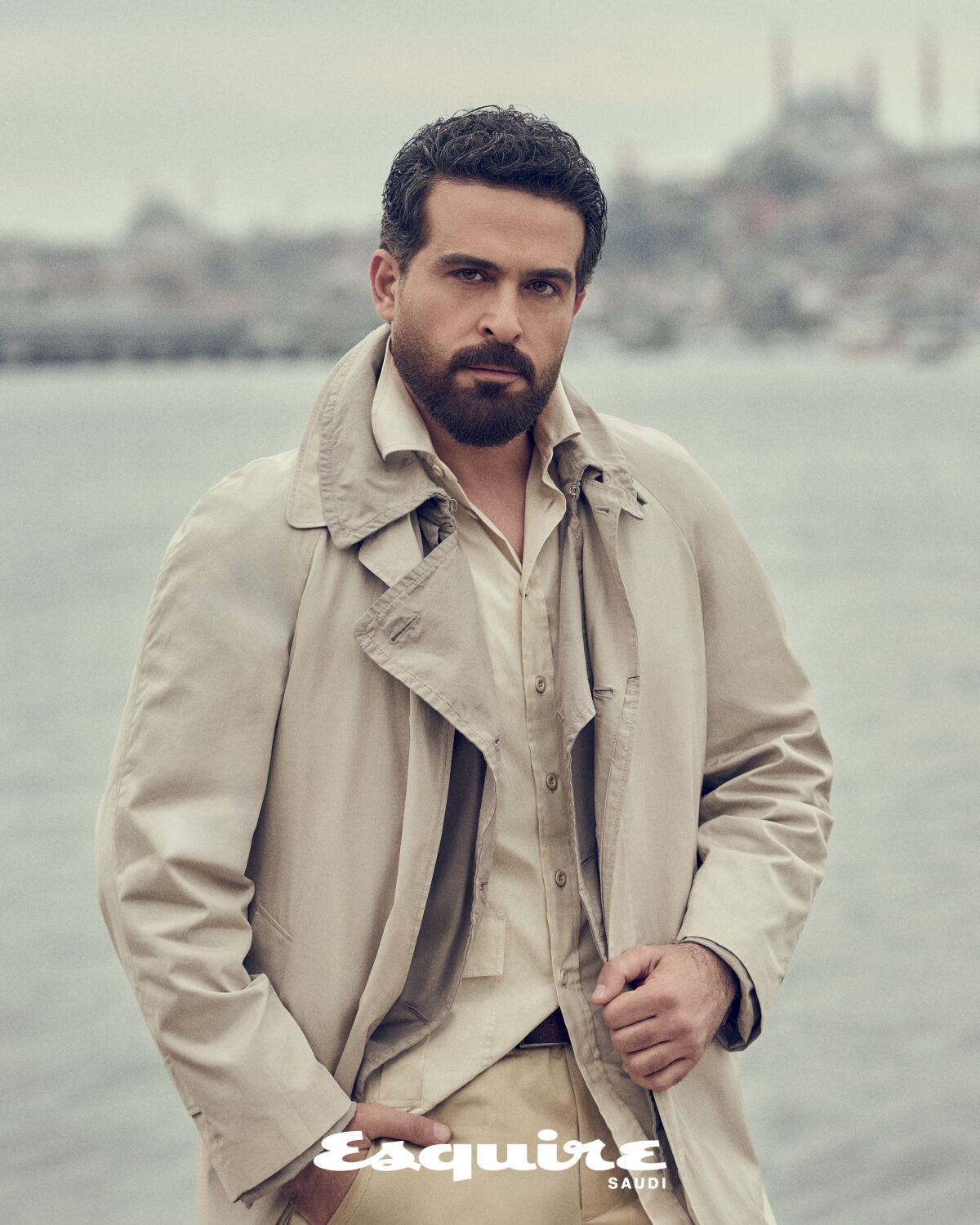

Mahmoud Nasr is one of the region’s most compelling leading men. From Al Nadam to Layl, he has built his career on cumulative success rather than a single breakthrough role. For an actor who wants people to remember his roles, not his name, he finds that they remember both.
On a cloudy spring morning in Istanbul, the air is cool, the Bosphorus calm, but the set is in full motion. Crew members move quickly, adjusting lights, checking frames, calling cues. In the middle of it all, Mahmoud Nasr stands still. Observant. Watching. Absorbing.
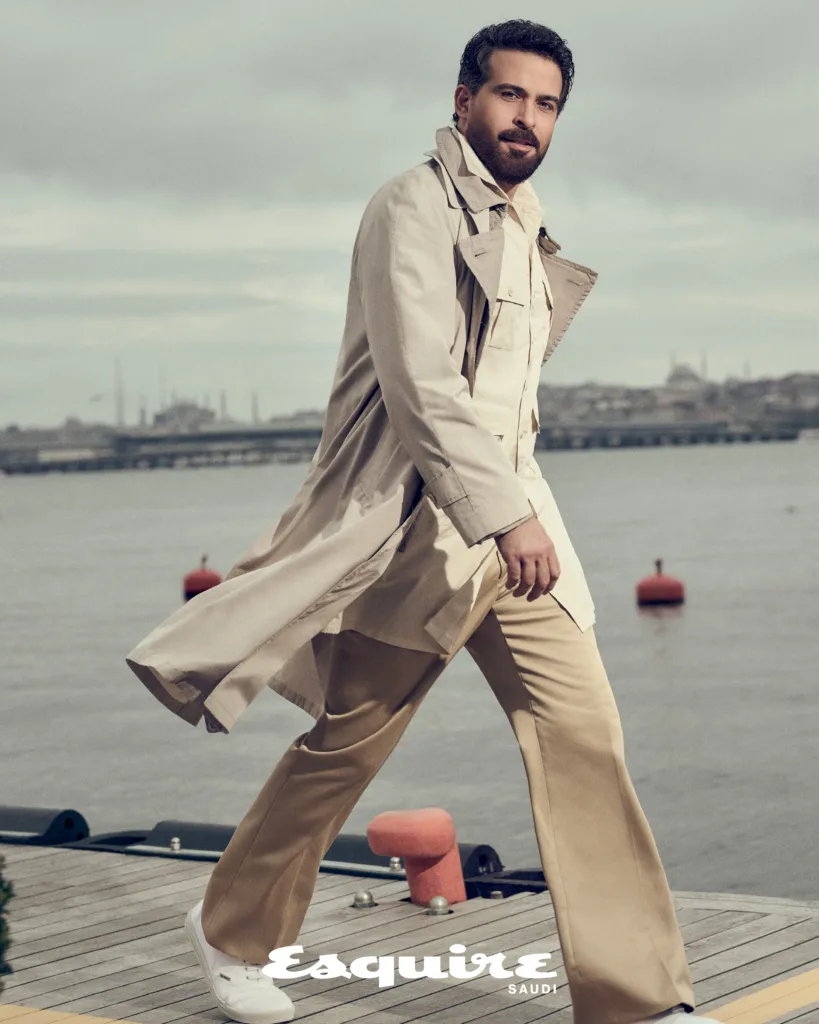
When he finally speaks, it’s measured and articulate. He doesn’t rush his words, and he doesn’t waste them either. For someone who avoids frequent media appearances, he is unexpectedly expansive in conversation. Thoughtful, precise, and quietly engaged, as if every answer has already been considered before it’s spoken.
“I don’t do many interviews,” he says early on. “Not as a strategy. I just prefer that my presence in the media is tied to something meaningful, a project, a story worth telling.” He pauses briefly, then adds, “I don’t care if people remember my name. I want them to remember the roles.”
But right now, people remember both. In the past two years, the Syrian actor has achieved something few actors manage once, let alone twice. Two consecutive long-form series, each spanning around ninety episodes, have dominated regional charts for sixteen weeks straight. First came the award-winning Crystal in 2023, followed by Layl, currently streaming, which returned to the number one spot immediately after Eid, despite a Ramadan break. Audiences didn’t just come back for the story. They came back for his character.
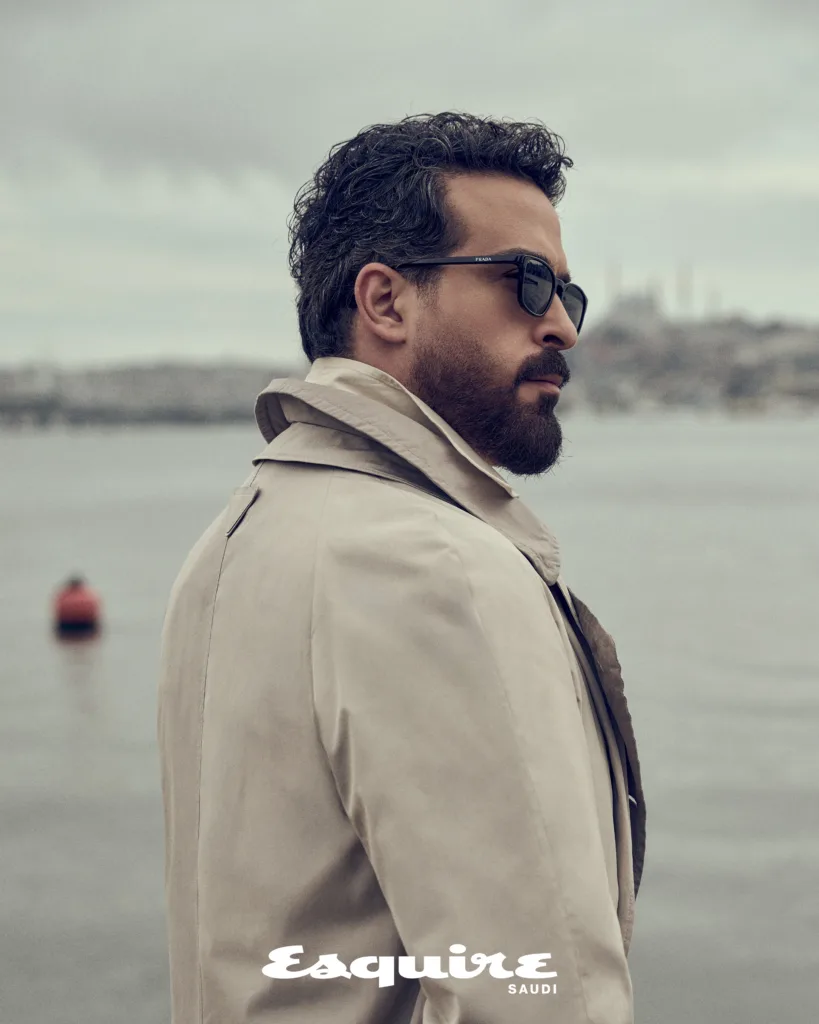
In Layl, Mahmoud Nasr plays Najm (Arabic for “star”), a complicated man with a rural past, a childhood love, and a struggle between loyalty and revenge.
“He doesn’t resemble me,” he says. “But there’s always something. A feeling, an experience, a memory.” That overlap is natural, but limited. “You take from yourself, yes. But you also build. Acting is construction. You read between the lines, you create a history, and then you let it grow.”
It’s our first time meeting, yet I feel like I’ve known him for years. That subtle humility carries weight and substance. After all, he is an actor who studied his craft.
“I separate myself from my roles completely,” he explains. “Even if filming takes months. That’s something you learn. You have to.” For him, the discipline goes beyond technique, it’s survival. “You could be going through something personal, something heavy. But if the scene requires joy, then you deliver joy. People don’t see what’s happening behind the scenes. They only see the moment. And your responsibility is to make that moment real.”
Despite Layl being adapted from a Turkish original, Mahmoud Nasr avoids comparisons entirely. “I don’t watch the original,” he says simply. “I treat every role as if it’s new. Because it is. Every actor brings something different.” He references how characters like the Joker or James Bond have been reinterpreted across generations, the same blueprint, entirely different results.
For Mahmoud Nasr, the difference lies in detail. “Even the simplest person carries a complexity that makes them layered,” he says. “Complexity isn’t necessarily loud; it can be hidden when you dig deep.”
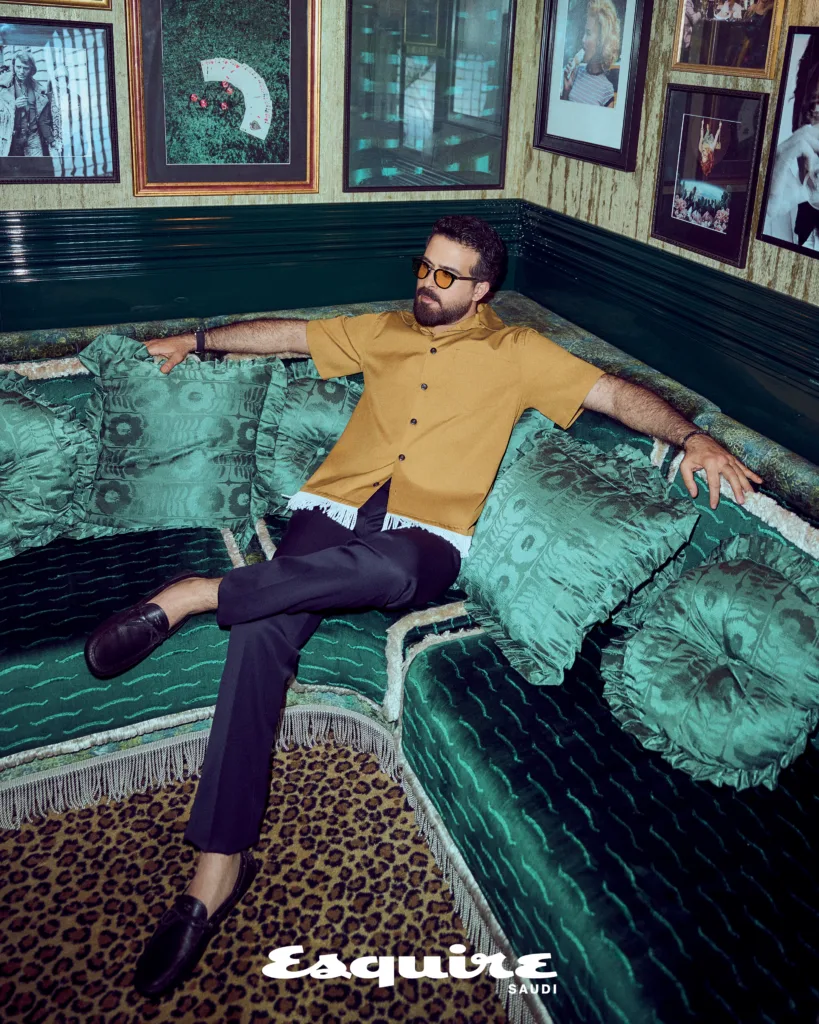
That instinct, the need to understand what isn’t immediately visible, traces back to his childhood. Born with a restless curiosity, he recalls a memory that feels almost too fitting. “When I was young, I thought people lived inside the television,” he says. “So, I used to go behind it, trying to see how they got in.”
The curiosity led to him discovering a love for acting through school theatre, and he soon realised it was something he could formally study. That decision led him to the Higher Institute of Dramatic Arts in Damascus, where he graduated top of his class before continuing his training in France. It was, as he describes it, less of a choice and more of an inevitability. “My destiny led me here,” he says.
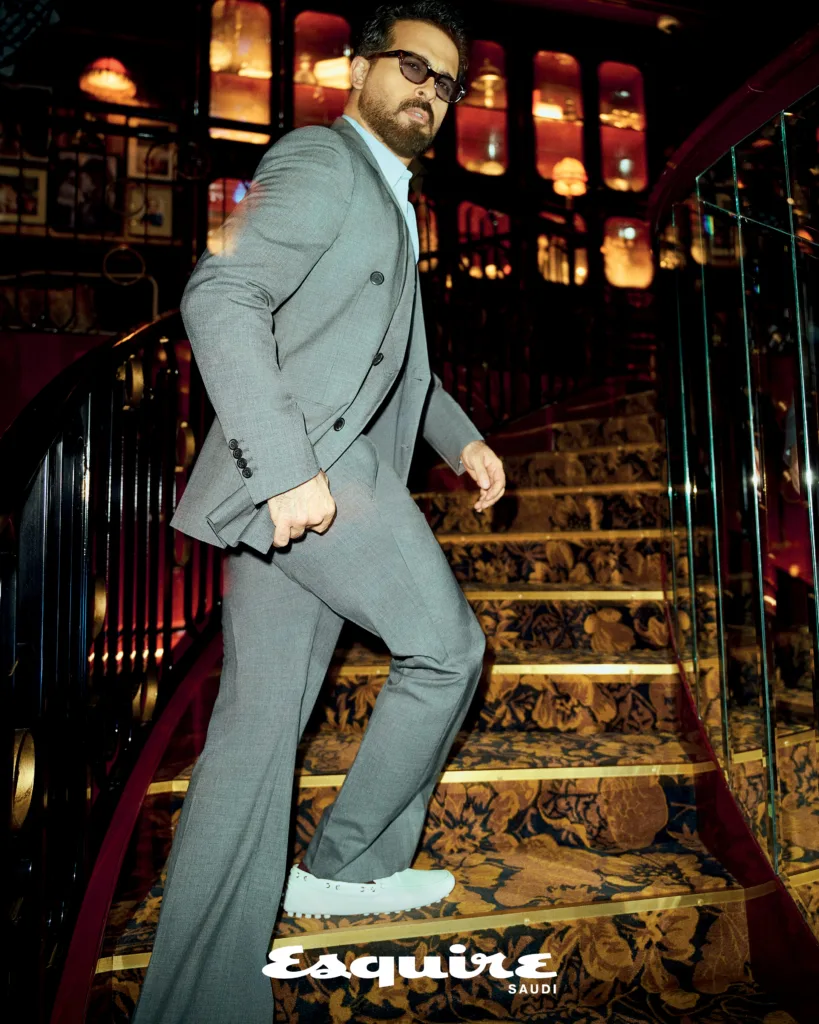
Then, early roles followed, including Mamarrat Dhayeqa in 2007 under director Mohammad El-Sheikh Najib, who recognized his potential early on and continued casting him. But the turning point might have been Al Nadam (2016), where he played Orwa Al Ghoul, a writer revisiting a past shaped by political upheaval and personal loss. The role resonated deeply with audiences across the Arab diaspora, tapping into displacement and longing. “This role was massive. It connected with people on a deeply human level. I think everyone saw a part of themselves in it,” he says.
Still, Nasr resists the idea of a single breakthrough. “There’s no one role,” he says. “It’s cumulative. Work builds on work.”
Another role, in Mamalic Al-Nar (2019), pushed him in a different direction entirely, darker, heavier. In one scene, his character is forced into an act of violence against a child so extreme it unsettled even him. “I had to squeeze the child actor, he cried and fell to the floor. I was shaking. I had to stop the scene to recover my breath. I remember thinking, how can someone be this cruel? But I had to do it,” he says. That willingness to go there, to uncomfortable places, is part of what defines his distinctive work.
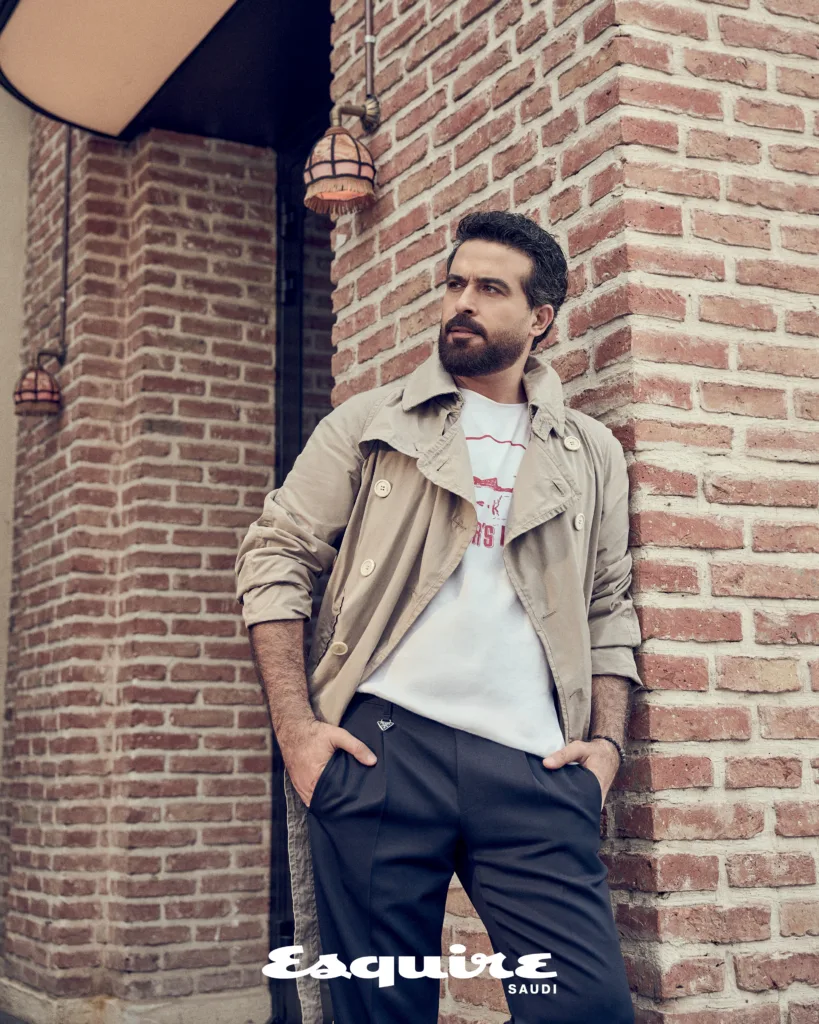
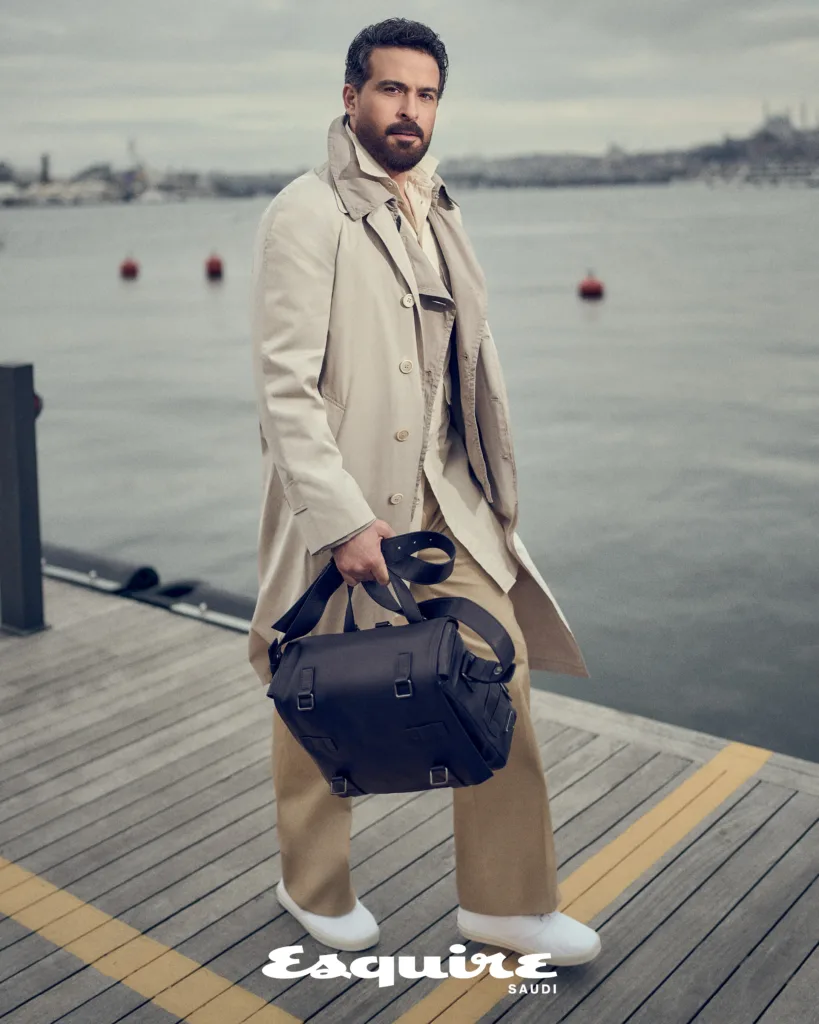
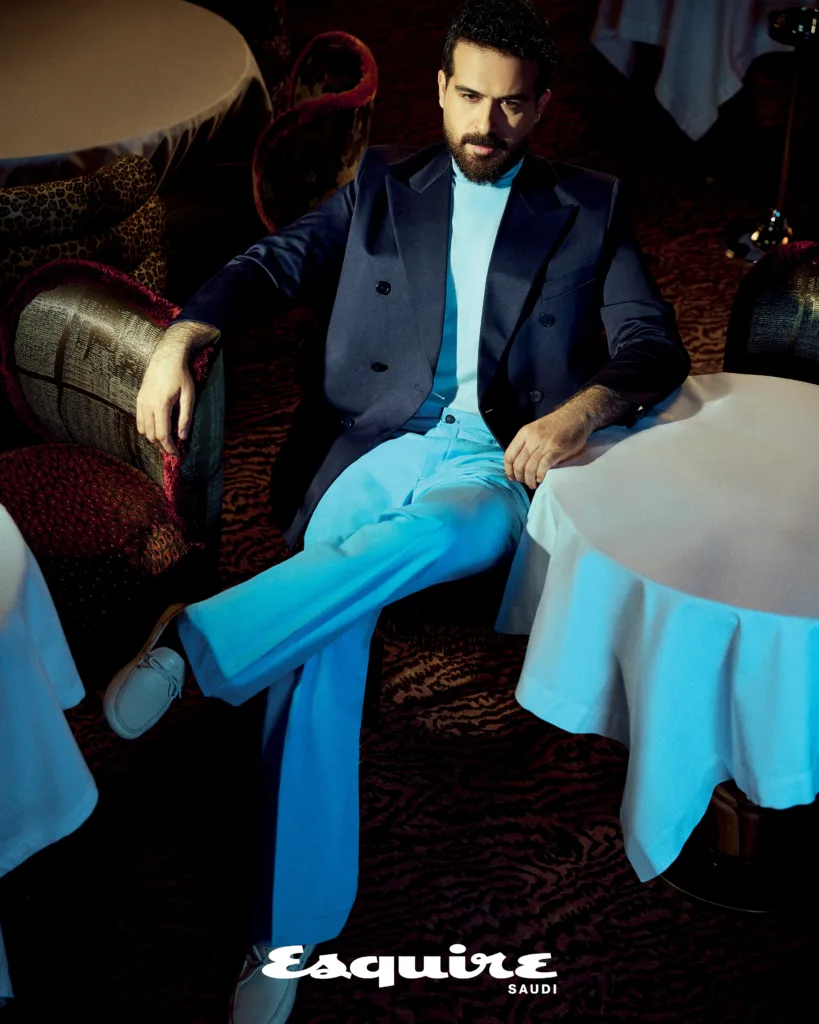
Cotton Trousers; Re-Nylon and Saffiano Leather Backpack, POA, all by PRADA

Playing Dr. Jawad, a successful, charming cosmetic surgeon who finds himself at the heart of complex emotional conflicts and loved by two women in the Turkish Arabised series Crystal (2023), propelled him to stardom across the Arab world and into wider markets, reaching as far as Indonesia. “This character was super popular, I even had hundreds of marriage proposals,” he laughs.
Over the years, his work has expanded from television drama into cinema, building a filmography of five titles, including the short Al-Makhadh (Labor) and four feature films—Cherry Messages (2012), Syrians (2015), The Confession (2018), and most recently Washm al Rih (Tattoo of the Wind, 2024). Each project has earned recognition at festivals across the Arab world and beyond, with Washm al Rih set to screen next at the Izmir Film Festival following its recent showing in London.
Nasr is very selective about roles, guided less by genre and more by character. Drama and historical narratives may dominate his filmography, but he’s open to exploring other spaces, provided they carry substance. “I wouldn’t mind comedy,” he says. “But it has to be intelligent, light, and meaningful.”
When pressed about dream roles, he hesitates, careful not to say too much. “What if someone takes the idea?” he laughs. Then, after a pause, “A musician, maybe. Or a poet.” It makes sense. There’s a rhythm to the way he speaks, a quiet appreciation for language, for nuance.
Back on our set, as the shoot moves indoors, the energy rises. More dramatic lighting, high ceilings, very cinematic. More coffee arrives, and conversations stretch. What was meant to be a brief interview extends naturally, without effort.
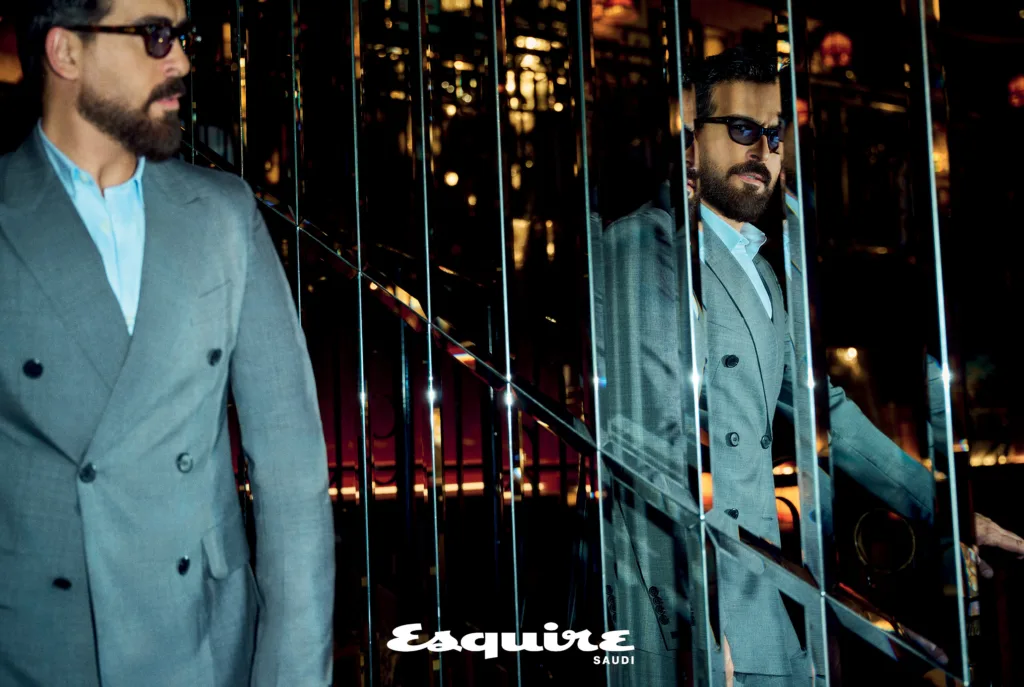
Dressed in a Prada grey double-breasted suit, he moves between takes with ease. He greets everyone, jokes with the stylist, exchanges quiet comments with the crew. There’s no visible shift between the actor and the person. The same grounded energy.
As the stylist does the final touches, he says, “My style is classy. Natural. Casual. I don’t like to overdo it, even in red carpet appearances. I like to keep it neat and minimal.”
The same could be said of his approach to fame. Despite being frequently described as one of the region’s most charismatic leading men, he doesn’t fully buy into the label. “Do I seem charismatic?” he asks, half-serious, half-amused. He doesn’t reject it, but he doesn’t lean into it either.
Off camera, Nasr remains close to his family, often referencing his mother’s influence with quiet respect. Away from acting, his interests turn toward the visual. He sketches, paints, often while rehearsing his lines. “It helps me think,” he says. “To see things differently.”
His relationship with fans remains direct, full of appreciation. “I don’t run away from my fans. I’m always happy to say hi and exchange a few words when I meet them. After all, the best result of what we do is seeing people connect with it,” he says. “That’s why we work.”
Social media, for him, is a tool. “I know how I want to present myself,” he says. “Primarily through my work.” When he does use his platform, it’s often tied to purpose, including charitable initiatives. “It gives meaning,” he says. “There’s already too much inequality in the world. If you can help, you should.”
The set begins to quiet down. Equipment is packed, final shots reviewed. Somewhere in the background, someone calls time. But the conversation lingers, unfinished in the best way. And for someone who avoids interviews, Mahmoud Nasr has said a lot.