


Fahad Aljomiah, the founder and driving force behind 1886, talks to Esquire about bringing Saudi youth culture to global streetwear
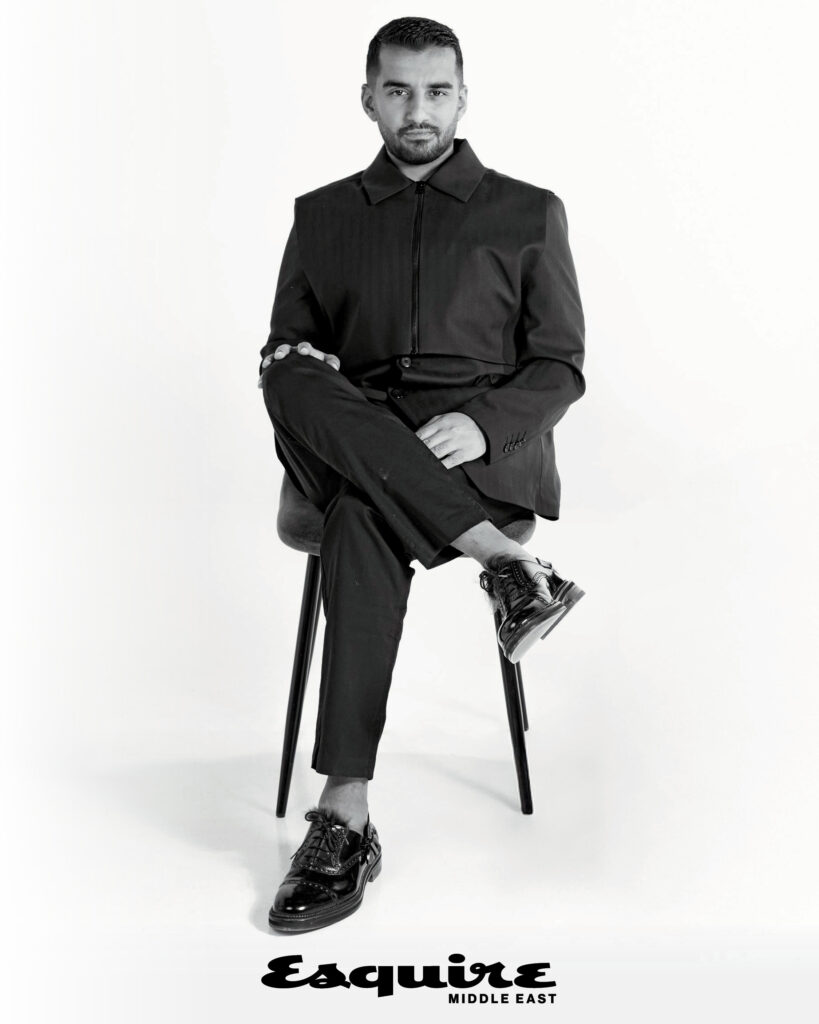
ESQUIRE: What inspired you to start 1886?
Fahad Aljomiah: 1886 was born out of curiosity and a desire to create something that represented our generation of Saudis, people who grew up connected to the world but rooted in our own identity. It started as an experiment in London, sketching ideas that reflected who we were, and evolved into a brand that celebrates the Saudi spirit through modern design.
ESQ: 1886 began as dorm room sketches in London and is now stocked at Galeries Lafayette Paris. How did the brand get from there to here? FA: It has been a journey of persistence and belief. We began with small drops in Riyadh and pop-ups to test the market. Over time, we refined our collections and built our own stores. Each step was about learning, improving, and staying authentic, and that authenticity eventually opened doors in Paris.
ESQ: Where do you draw inspiration for your collections?
FA: From everyday life, including the contrast between old and new in Saudi Arabia, the architecture, the energy of Riyadh, and how people express themselves through fashion. I am also inspired by travel and observing how different cultures tell stories through clothing.
ESQ: Who is the 1886 customer? Who are you really designing for?
FA: Our customer is confident, ambitious, and modern, someone who wants to express individuality without losing their roots. We design for people who see fashion as part of their identity, not just something to wear.
ESQ: 1886 merges Saudi identity with global streetwear. Can you point to a subtle Saudi detail in your designs that might go unnoticed at first glance?
FA: Yes, we often hide cultural references in the structure or details of the garments. For example, certain stitching patterns are inspired by Najdi geometry or the clean lines of Diriyah’s architecture. It is about translating heritage into subtle, wearable codes rather than direct symbols.
ESQ: Streetwear is often about rebellion. What are you rebelling against with 1886?
FA: For us, rebellion is about redefining perceptions, showing that Saudi creativity can stand alongside global fashion on the same level. It is rebelling against limitations and against stereotypes of what Saudi fashion “should” be.
ESQ: How do you maintain a distinctly Saudi voice while appealing to a global audience?
FA: By being honest. When you design from an authentic place, people anywhere in the world can feel it. We do not try to imitate others. We tell our own story in a way that is universal, using clean silhouettes, high-quality materials, and a clear vision.

ESQ: How do you see Saudi fashion evolving, and what role are events like Riyadh Fashion Week playing?
FA: Saudi fashion is moving fast, evolving from individual efforts to a structured industry. Riyadh Fashion Week is a catalyst for that transformation. It gives Saudi designers a global stage and helps define a new narrative of creativity and culture from this region.
ESQ: Looking ahead, what’s next for 1886?
FA: We are expanding internationally, building new retail experiences, collaborations, and entering new markets in Asia and Europe. At the same time, we are growing our design team in Riyadh to keep our creative core local and strong.