

Twenty years ago you might have picked up a second-hand watch at an antiques fair. Doing so might have been considered quite the alternative choice. At the same time, the international auction house Sotheby’s would have been selling around US$2m of second-hand watches. But time moves on, especially after a good service. These days second-hand watches are more marketably referred to as vintage watches. And this year Sotheby’s will sell in the region of US$100m of them. It’s been its best ever season.
That doesn’t surprise Mohammed Abdulmagied Seddiqi, Chief Commercial Officer of Ahmed Seddiqi & Sons, the family jewellery business established some 60 years ago and now with 51 destinations across the UAE. “We’ve been studying the growth of pre-owned watches for the last ten years and the impact on the industry has been tremendous. At first it was shocking, but it does make sense both as people can buy certain models that are not made any more, or buy for investment purposes,” he says. “It has become a very important point in the watch industry today.”
This month Seddiqi pulls the wraps off its first plunge into the second-hand watch market opening a new concept store in Dubai as part of joint venture with WatchBox.

Known as WatchBox Middle East, the US headquartered online platform for the buying, selling and trading of ‘pre-owned’ luxury watches has developed a global footprint – and reputation – due to its position not as an open online marketplace but as an e-commerce platform that owns and trades its own inventory of some 4,000 watches pieces worldwide.
“There’s a good reason why the likes of Bucherer or Richemont are going down the pre-owned route, because the customer is demanding it,” says Danny Govberg, co-founder of WatchBox. “There’s a recognition that some watches are like Krugerrand – they retain their value, and they’re around for decades, for a hundred years. The value retention is so great, of course people want them.”
“It’s really no different to, say, Mercedes going into selling pre-owned cars 25 years ago, when prior to that the idea would have been considered crazy,” Govberg adds. “If you have a car and want a different one, nobody gives a second thought about selling their car. Either a customer has a watch they don’t wear anymore, they want to trade it for one they like more, or there’s a certain style of watch they want which they can’t get new anymore. As with cars, so with watches too in that people are also waking up to the fact that you can buy a great watch that’s just a few years old for half the price of the equivalent watch new. Who wouldn’t want to take that kind of offer?”

Yet it’s not just the savings that are likely to draw buyers to pre-owned watches. There are few objects of desire for which it can be argued it’s better to have used than new – some but not many cars; unusual but very few items of clothing; certain pieces of furniture, each with an attendant cachet. But watches? Yes, it can seem that the greater the length of time a watch has recorded, now the greater its desirability.
Certainly an interest in vintages watches has grown with that in all things vintage. As goods generally have become increasingly commodified and widely available, with shopping homogenised wherever you are, demand for the rare or unusual that the ‘antique’ object embodies was perhaps inevitable. If homes are limited in size and the clothing we wear by the conventions of work, the vintage watch becomes the ideal everyday expression of a certain kind of insider cool and connoisseurship – while also tapping the innately human sense of nostalgia, even a displaced nostalgia that references a period one may not have actually lived through.
“The fact is that watch manufacturers today churn out thousands of watches,” says Sam Hines, international head of watches for Sotheby’s – indeed, while it doesn’t release production figures, even Rolex, arguably the single most covetable watch brand in the world, is said to produce around 800,000 watches every year. “In contrast, it’s hard to find good quality vintage watches. You need to hunt. Sure, a vintage watch speaks of other times. But there’s also a competition there that, naturally, is all a bit about showing off.”
Undoubtedly the vintage watch market tends to underscore the trainspottery nerdiness that many men indulge when they really get into a subject, perhaps especially in relation to things mechanical. If contemporary watches offer the talking points of movement, construction, function and design, vintage watches offer all that and the wonders of small differences. Very small differences.
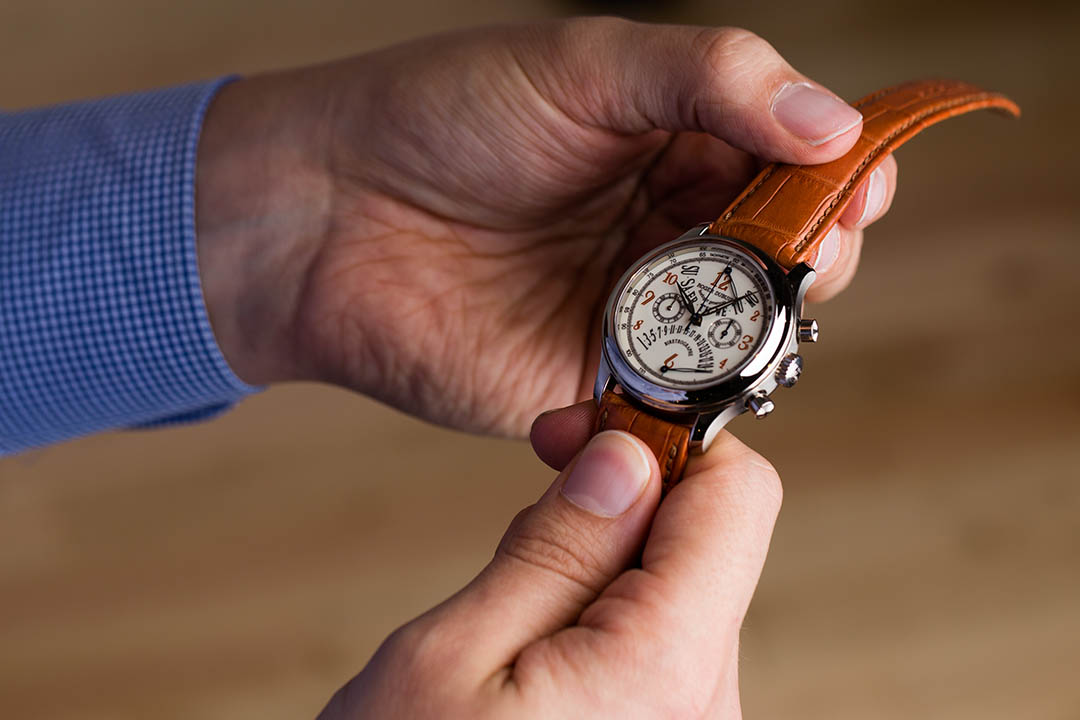
“You see men – and it’s nearly always men – coming together to talk about their watches, often about a certain brand very specific type of watch,” says Hines. “In Indonesia, for example, there’s this group called the Vintage Rolex Asylum, and these guys get together to for two days every year and all they do is sit there and talk about bezels and case-backs. Of course, they all want to have the rarest watch, to talk about how their’s has some small detail that indicates a certain watch from a certain period. And these details get down to ever finer degrees. There are meet-ups like this going on all over the world now.”
And how do they know about these ever finer distinctions? The internet, which has made vintage generally a more mass phenomenon. It’s fueled interest in vintage watches and made it easier both to research and, importantly, to authenticate them. It’s also no coincidence that, as the figures cited above suggest, the 5000% increase in the market for vintage watches has come over a period that echoes the arrival and ubiquity of the web.
“Before you’d have been rather unusual in your interest in vintage watches and would have to have just walked into an auction house without knowing what they had,” he says. “Now all the information is out there, which drives interest and, of course, makes watches all the rarer.”
And that, in turn, has made vintage watches an investment asset. Investors may not have much imagination – Rolex sports watches, classics the likes of Patek Philippe’s Nautilus or Audemars Piguet’s Royal Oak and stainless steel chronographs from the 1950s to 1970s are most in demand right now. But that’s probably with good reason: they’re safe if unspectacular bets.

Contrary to all of the buzz, all but a few watches from an even smaller number of makers – not just the big two but Panerai, Vacheron, Breguet and Omega – typically depreciate, albeit sometimes by not much more than the effect of inflation. The big returns come with watches that are extremely rare, of historic import, a one-of-a-kind from a recognised master watchmaker or, sometimes, have an interesting provenance.
Take, for example, the auction of an otherwise run-of-the-mill gold Rolex that stunned the watch world a few years back. The watch was given an estimate of CHF6-10,000. It sold for CHF100,000, all because, the auction house retrospectively surmised, the watch had once been owned by German Chancellor Konrad Adenauer. In 2017 a ‘Paul Newman’ Daytona – the Rolex watch so nick-named after the man with which it’s most closely associated – sold for US$17.75m, making it the most expensive wristwatch ever sold. But then this was the motherlode: the ‘Paul Newman’ Daytona that had actually been owned by Paul Newman.
But then you need luck and/or big bucks to get these kind of watches in the first place. Demand for good vintage pieces is so hot that, Hines argues, there will have to come a cooling down to more sustainable prices. If you’ve heard about a certain watch being the one to hunt down because it’s shown good returns over the last five years or so, forget it – it’s probably already peaked.
“Of course, when the prices of certain rare pieces go up so dramatically, you get the interest of people who are not watch buffs at all – they just want the asset, though it’s interesting that so many collectors are interested in such a narrow range of watches at the moment – and that’s probably the influence of Millennial customers and social media making certain watches that much more visible, such that everyone seems to be after the same thing,” suggests Julien Schaerer, head of the Geneva-based specialist watch auction house Antiquorum. “These are the kinds of vintage pieces that you can wear on a daily basis, that can take a bang and still be a good asset – they’re all watches you can sell a few years down the line and at least get your money back.”
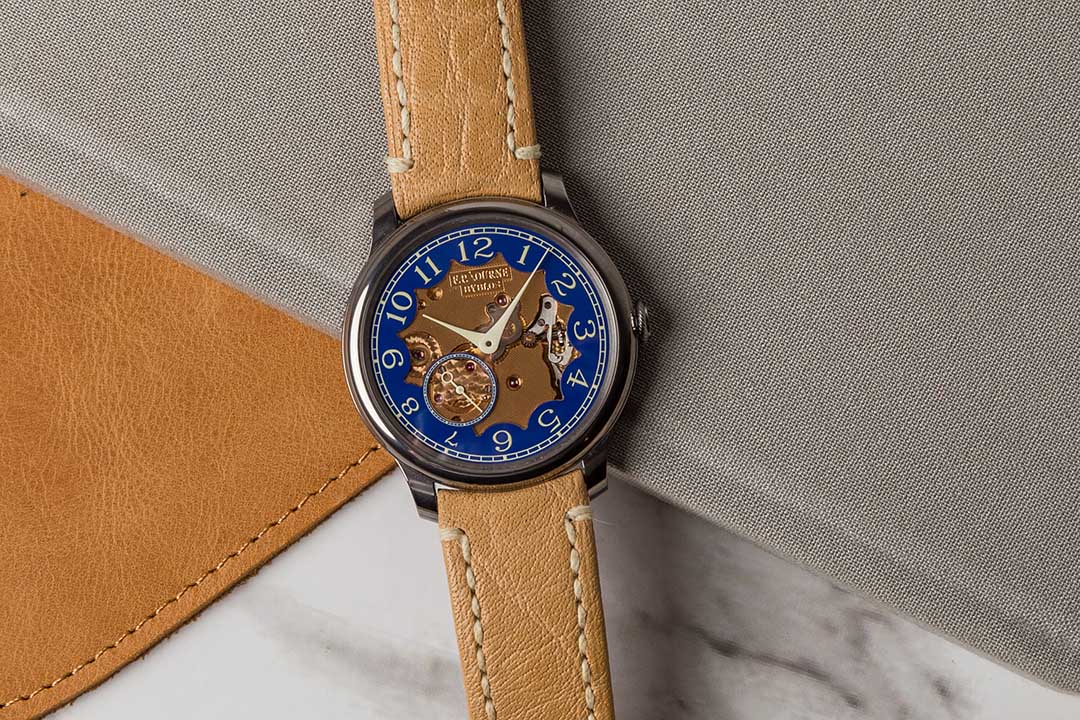
That, he stresses, depends on a good few conditions however. That vintage watches have become this new asset class has in turn placed extra emphasis on condition. There are vintage watches and, as it were, wholly vintage watches, and it’s the latter that best retain or appreciate in value. For a dial to have been refurbished or for parts to have been replaced – unless, perhaps, they have been replaced with the correct factory vintage parts, which, since manufacturers are unlikely to hold such stock, is next to impossible – is to devalue the piece by up to 50 percent. Some won’t be sellable at all.
Even the most basic steps to what would normally be considered improving an old watch can backfire. A watch from WatchBox/Seddiqi is likely to be overhauled to look as new, “much as if you had a properly vintage car you’d want it in original condition, but if you had a 2001 Porsche you’d probably bring it up to ‘as new’ condition,” argues Govberg. But Hines speaks of a collector who returned his vintage piece to Patek Philippe for servicing – part of the process of which, historically, would involve polishing the case to remove any scratches – but whose clear-cut instructions not to do so somehow was lost in translation. That simple smartening up of his watch reduced its market value by at least 30 percent. “He was not very happy about it,” recalls Hines, “such that I think Patek ended up reimbursing him in some way.”
But that the vintage market seems so focused on such a select range of products is, Schaerer stresses, a shame “because there are a lot of nice watches of similar or better quality, rarer too, that are selling for less than they should. So there are good deals for anyone ready to go against the trend and, as we always advise, buy quality but also buy what they like rather than what everyone else likes. Will we ever get away from the Rolexes and Royal Oaks? Well, I’m still hoping.”
Certainly all this talk of the obvious brands and their often eye-watering prices on the second-hand market skews the broader pleasure of owning a vintage watch simply because it’s old, because it’s exemplary of its times, or because it’s a striking and less predictable design. Prior to the so-called ‘quartz crisis’ – when, in the early 1970s, the advent of quartz movement technology killed off many of the traditional mechanical watchmakers of Switzerland, Germany and, less so, France and the US – there were literally hundreds of brands, each striving for their own identity. The result was a plethora of watches that might not impress by the name on the dial, but for the strength of their look – all at affordable prices too.
“It used to be more common to find rare vintage watches relatively unworn and usually for a very fair price – but those days are essentially over for the famous brands,” explains Mitch Greenblatt, the collector behind the Watchismo and Watches.com blog and co-author of the forthcoming book ‘Retro Watches’ (Thames & Hudson), detailing this pre-crisis golden age of watch design. “But there remains a world of lesser-known but equally stylish vintage watches — often built just as well as the ones that come instantly to mind. When I started collecting vintage at the end of the century, I had budgetary concerns combined with a distaste for everything contemporary, especially in regards to watches. Rolex, Patek and other what-you-expect watches represented – to me at least – conservatism, elitism and worst of all, a lack of aesthetic evolution.”
In contrast, he suggests, the pre-crisis 1960s and 1970s saw a paradigm shift in watch design and technology, with the dawn of electronics, plastics and digital displays, the mechanical emulation of the same, but also a bolder use of colour, graphics and case shape. These were sometimes the ground-breaking creations of visionary product designers hired from outside the watch industry, the likes of Francois de Baschmakoff for LIP, or Richard Arbib for Hamilton.
It’s small wonder that major manufacturers, from Longines to Brietling, Tudor to Zenith, have recently delved deep into their archives and re-issued updated versions of their watches from precisely this period. But, while such pieces offer the same pleasure in style as vintage clothing or furniture, likewise reproduction loses something that the originals retain: a sense of history. And what better to represent the passing of time than a watch than reflects that in its very physicality? That’s why, while there’s a growing demand for vintage watches that are pristine – dead-stock, to use a term more typical of vintage fashion – many vintage watch fans love the signs of aging that their vintage piece show: patina not only gives a watch rarity value but individuality. It fives a nebulous but nonetheless deeply felt connection with the past.
This isn’t to say a properly battered watch is good. But the enthusiast might well actively favour a watch whose white indices – through the action of heat and light over time – have turned ivory; for its black dial to have mutated into a shade of brown, or ‘tropical’, as it’s known in the trade; for the bezel to have faded to grey, or, better still, for the numerals to have disappeared altogether, a look known as a ‘ghost’ bezel. Not for nothing have recent years seen watch-makers mimicking in new models the colouration more typically found in patinated watches; or start to use bronze for cases and bezels – a material historically avoided precisely because, superficially, it changes over time.
“We do get people in who just don’t get it,” laughs David Silver, owner of specialist dealer Vintage Rolex Company, where you can buy a patinated vintage watch for perhaps two to three times the price of a mint equivalent – at the extreme, a 6538 big crown Rolex Submariner, for example, can be yours for a not inconsiderable US$200,000, or $400,000 if you want it with a tropical dial. “It’s understandable – to them they’re being asked to pay a premium for a watch that looks older. But that’s precisely the appeal for other customers.
“Besides, it’s a matter of time before such signs of aging in a watch are probably lost,” he adds. “You can be sure that a company the likes of Rolex – for which it’s all about preserving or enhancing the functionality of the watch – will engineer out the patination process, by using materials that will better fix the colour, for example. In time that will take the charm out of the aging process.”
And charm, ultimately, is what is at the heart of a vintage watch’s draw. “You know, even watches from the 90s are getting a nice patina to them now – and for some generations that’s a long time ago,” laughs Chris Youe, vintage specialist with dealers WatchClub. “But that means the vintage market is broadening for everybody. Sure, everybody appreciates those classic designs but we’re seeing growth in more unusual designs now too, with brands we certainly wouldn’t have been having a conversation about just five years ago. Why? It’s really not because of their investment value. The fact is that you can’t get passionate about an investment. It’s simple. It’s because a vintage watch is, each in their own way, special, unique. It’s evocative. A vintage watch has a romance to it.”