
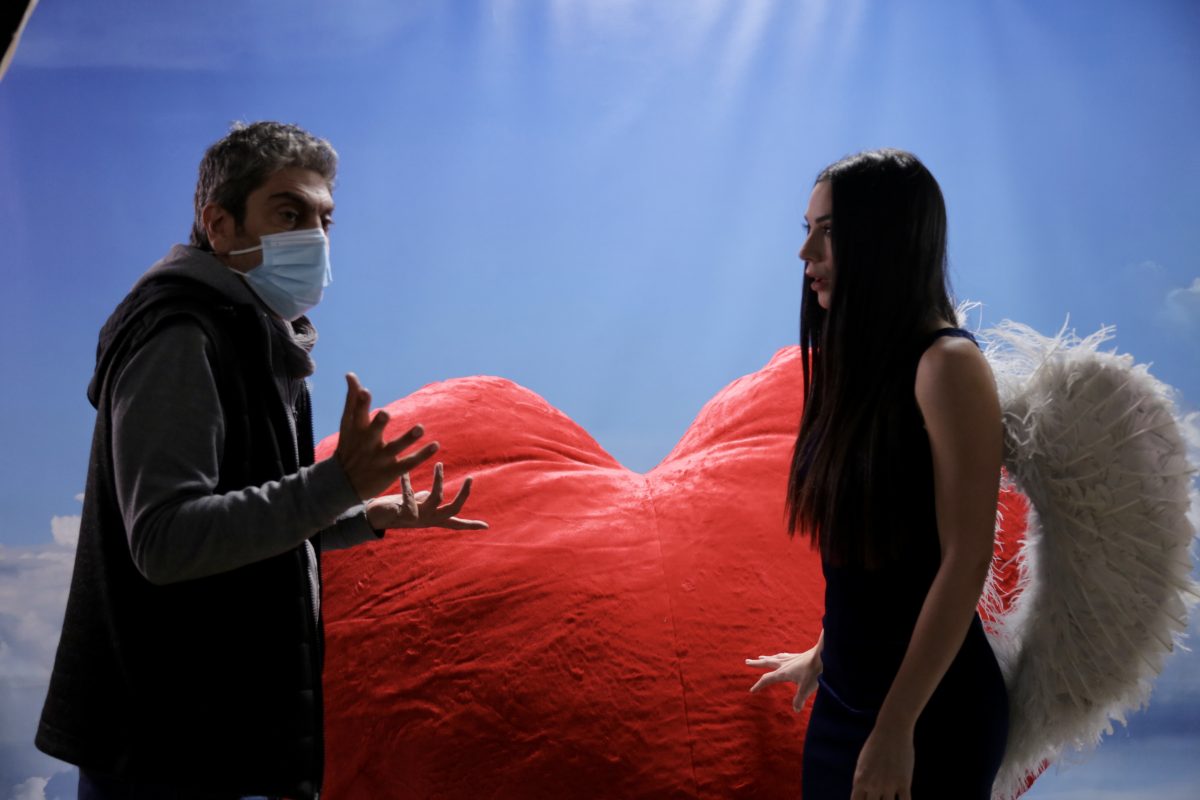

Saudi filmmaker Abdulmohsen AlDhabaan wasn’t sure what to say. He’d just received a call from Netflix, the world’s biggest streaming platform, who came to him with a simple request: Make a short film above love in Riyadh.
It was a chance to show the world a side of Saudi Arabia that had never been seen before—a prospect so momentous that his throat got dry just thinking about it.
“It was something new to me—and new to Saudi. Our stories are usually about family, about personal and societal values, and examining a person’s role in their community. To think neutrally, and to make a romance movie with a comedy frame in the city of Riyadh—my city—would be a real test to my capabilities as a storyteller, as a writer and director,” Aldhabaan tells Esquire Saudi.
As he turned over the possibilities in his mind, all hesitation faded. It was too good to turn down.
“I had to do it. From there, this project became for me, for the first time in my career, an attempt to find love in Riyadh. Even if the essence of the project was comedy, I was motivated to find the value of love here. It was hugely appealing to me,” AlDhabaan continues.
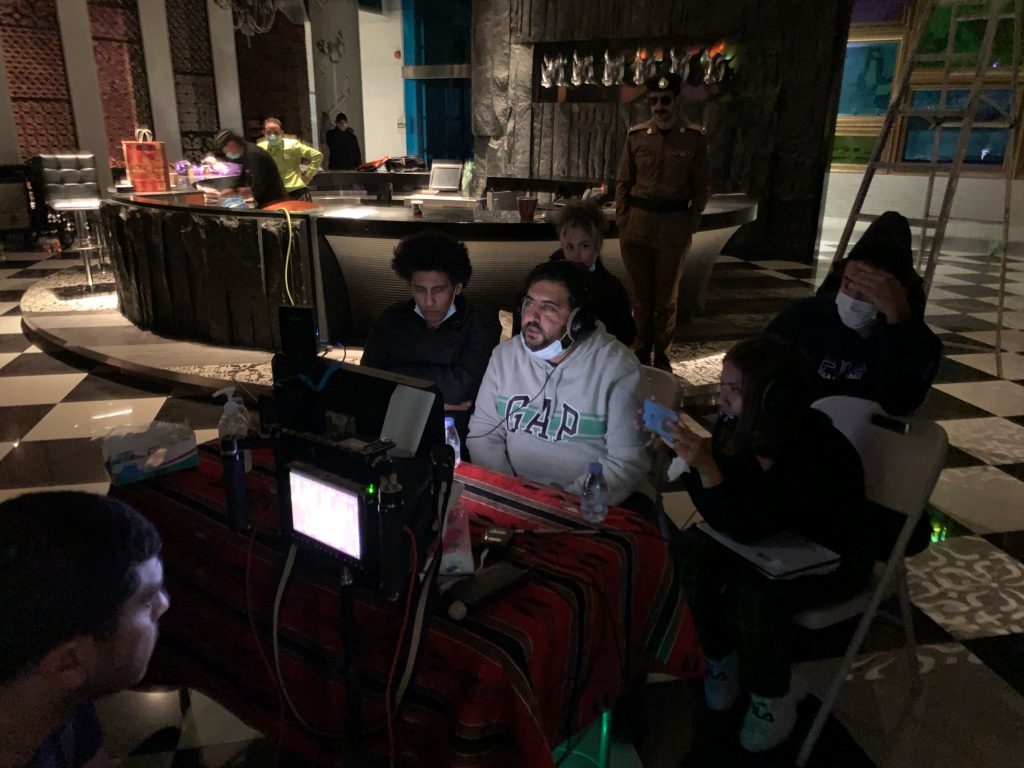
Netflix made other calls, too—eight, to be precise. They called some of the best filmmakers working in the Arab world today, including past Oscar-nominees Hany Abu-Assad (‘Paradise Now’, ‘Omar’) and Kaouther Ben Hania (‘The Man Who Sold His Skin’), and the groundbreaking Saudi filmmaker Mahmoud Sabbagh (‘Barrakah Meets Barrakah’), each to explore how love manifests in the place they call home, and the many obstacles that rise in its way.
The result is ‘Love, Life, and Everything in Between’, an anthology series that does something that no TV show has before—uniting filmmakers from across the region in one project, and in doing so, elucidating both the shared values that unite us and the stark contrasts that define us.
“I’m truly honored to be a part of this. It’s such a wonderful project,” Abu-Assad tells us. “I feel that a lot of the creativity in the world is coming from the Middle East and the Arab world. We’ve long been mistreated, dehumanized, and brushed aside. Here, we can finally unite in all our different ways, and show our crazy side—treating the subject with a lot of humor and a lot of self-reflection.”

“Our producers really gave us the freedom to do whatever we wanted, no matter how crazy. It was really a great pleasure,” add Amira Diab who wrote and co-directed the short film ‘Kazouz’ with Abu-Assad.
What made the show so enticing to the filmmakers is exactly what makes it enticing to the viewer—what will each filmmaker do with the total freedom the prompt offered?
“It’s joyful to watch, because it’s about the surprise of discovering, like a Kinder Egg. You don’t know what you have inside each and every film, and I think this is lovely, because we all worked separately, and had no idea what to expect from the others,” says Michel Kammoun.

Siloing each film’s production made the process extremely personal for Kammoun, who had been struggling in the wake of the tragic 2020 Beirut blast and ensuing economic collapse, he tells us.
“At the time, I had to drag myself to get out of bed in the morning. When something like that starts to happen, you question cinema. Art becomes an easy target. Even for people who make art, we ask ourselves, ‘A doctor is vital today. How am I vital? What do I add?’ We understand the importance of art, but in everyday life, when people are struggling, you wonder what you can do to feel like you’re adding something. And by making people think about everyday life, and the problems we all have—it could be sad, it could be funny. Often times, it could be both. That is what I tried to do with this project. I wanted to add something,” Kammoun tells us.
“It gave me oxygen, to tell you the truth. It was anti-depressive to work on this project. I used it as a weapon to give me hope, and a reason to continue,” he continues.
There may be another reason that Netflix made the call to each of these renowned filmmakers. After all, over the last few years, the platform has made a huge push to not only create and globally distribute new Arab content, but, in partnership with Front Row Filmed Entertainment, to bring decades of both famed classics and underseen gems from across the region to the platform, reviving them for a new generation, including films from Abu-Assad and Kammoun.
“Independent directors always spend years working on movies and overcome tremendous production difficulties, only to struggle again to find a way to bring viewership to our movies. Netflix has changed that,” says AlDhabaan.

For Kammoun, having his old work suddenly finding eyeballs in nearly 200 countries has left him awestruck.
“It’s breathed second life into my work. I was finishing my second film and suddenly I’m getting phone calls from people across the world about my first film ‘Falafel’ from 2006. I was shocked—it was a Godsend. It’s unbelievable to see a relatively old film get a new lease on life like this—and it’s such a joy for me,” adds Kammoun.
It’s allowed the filmmakers to discover each other’s filmography as well.
“This revival helped me discover Michel’s love for vespas, as there’s one in this series as well. I kept thinking, ‘my God, he’s got a fetish!” laughs Abu-Assad.
“Wait until you see my second film,” adds Kammoun.
And as the past and present of Arab cinema find a steady home, the future we’ve spoken for so long about seems to finally be here.
For Mahmoud Sabbagh, whose film Barrakah Meets Barrakah was the first Saudi content licensed to Netflix, the project highlighted not only how far he has come personally, but how far the entire Saudi film industry has with him.
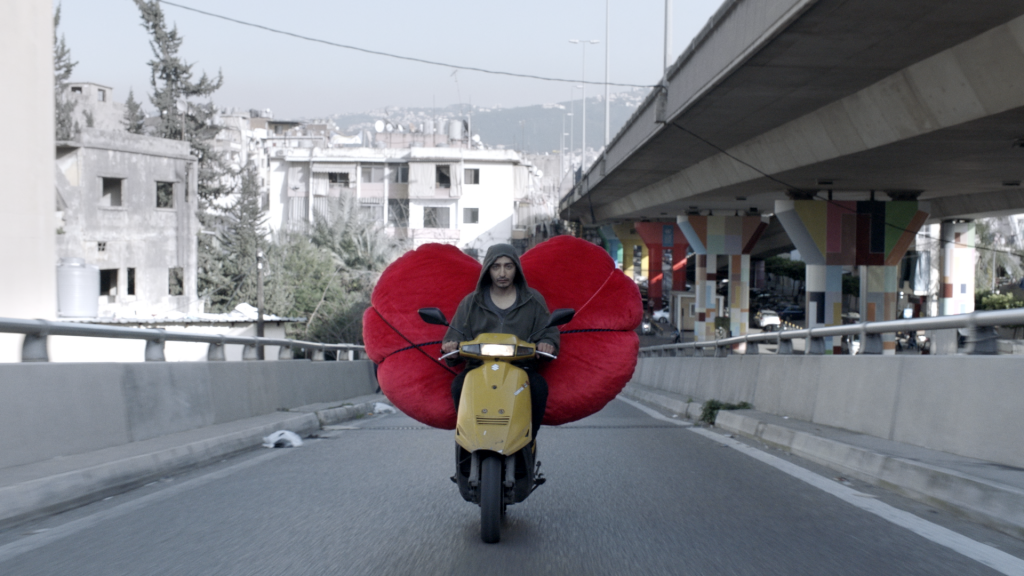
“Nearly 100% of this film was made by a local cast and crew, and I would say this is also a reflection of how things are changing right now. In 2014/2015, the landscape was more fluid. Now we’ve had time to develop an ecosystem. Making arthouse films anywhere in the world has its challenges, and some obstacles still remain, but you can find more and more local talent that is at an international standard, and it gives the film a more local texture,” says Sabbagh.
Now for the hardest question, asked from philosophers from Aristotle to Haddaway—what is love? That is one they’d rather let the films answer for themselves…
Watch here.