
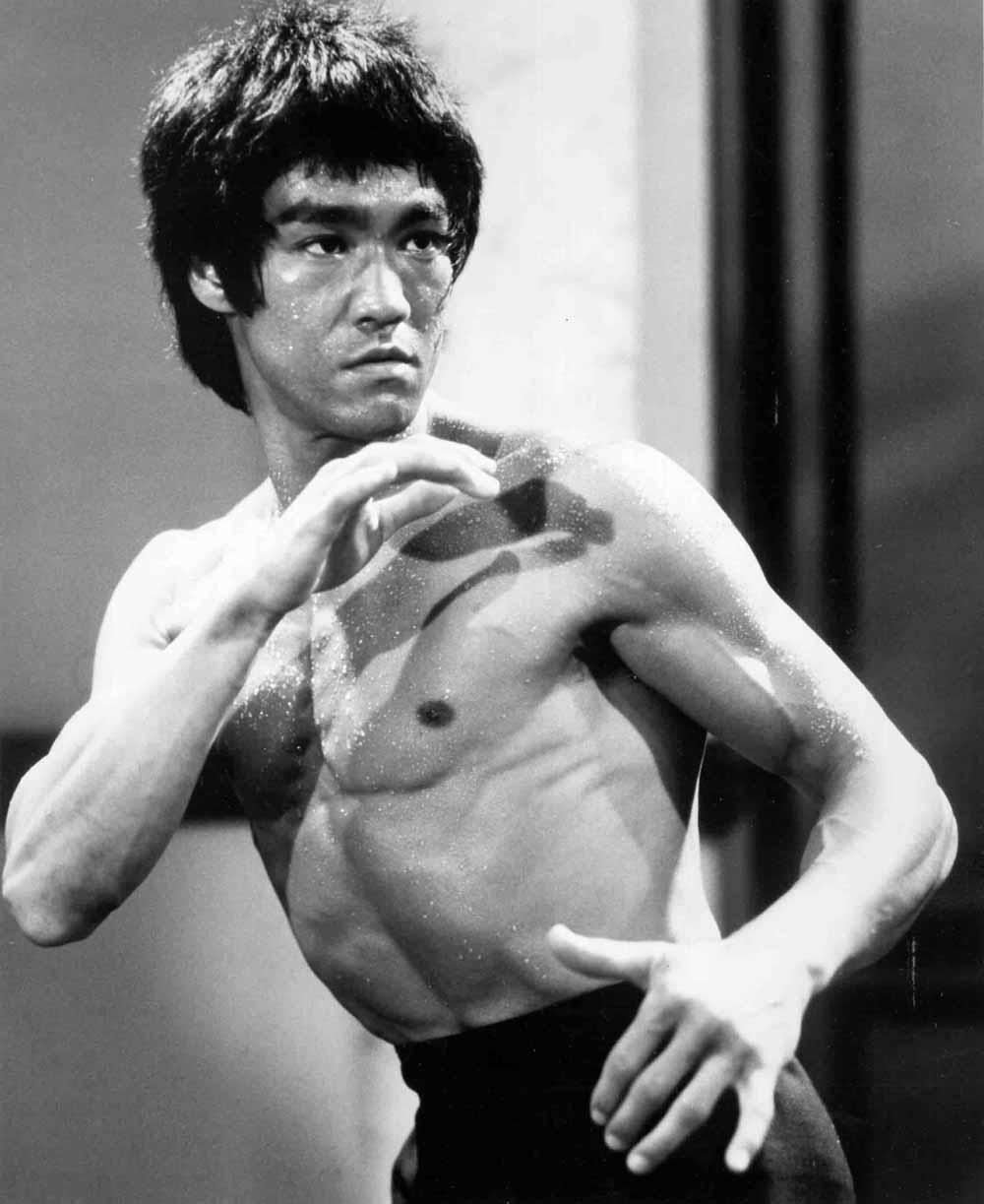

In Los Angeles’ Chinatown there stands a statue of Bruce Lee. A tribute to the impact the man had on global culture.
Lee’s influence was multifaceted, immeasurable. His specific martial art, Kung fu, remains reasonably popular, but other forms have risen on the glamour that he brought to the table. Mixed martial arts has emerged as a legitimate sport, while akido and tae kwon do are becoming virtually essential supplements to standard education. In parts of South America tae kwon do is the second most popular sport after football. Columbia is considering mandating it in school. In America, and to a lesser extent, Europe, it is becoming a rite of middle-class life: you take your kids to tae kwon do either before or after you take them to violin lessons.
There’s a reason that martial arts have become so popular with parents: a series of studies from Europe and the US have shown huge benefits from early martial arts education. It’s not in any way about learning how to beat people up. It’s about learning to sit still and listen to orders. The largest study of tae kwon do in American school found remarkable increases in executive function development, confirming earlier work on its role as a creator of ‘self-regulation’.
Martial arts are particularily good for boys, and have a strong effect on kids with ADHD. Earning a black belt feeds a child’s hunger for demonstratable accomplishment. In short, when you read a New York Times op-ed about a problem in contemporary education with boys, the solution is probably a discipline-based form of martial arts.
There recent studies contain a kind of implicit indictment of the educational trends of the past 30 years. Collaborative, esteem-building education models have become dominent in many schools. And for the most part, parents and teachers approve of those more ‘civilised’ forms of education. But then the same parents sign their kids up for martial arts, paying extra for a hierarchical, militaristic, structured form of rote physical learning.
The model was introduced to the world by Bruce Lee. Where the typical action hero had swagger and a huge gun, the hearoes in Bruce Lee movies acheive strength and mastery over violence through self-discipline. In a film like Enter the Dragon, the physical conflict is forced on the hero. He’d rather just be training all the time, honing the skills and improving himself, but when the situation requires it , he does his duty flawlessly.
LA’s Bruce Lee statue is the first kind in the world, of course. Aside from its most famous casting in Hong Kong in 2005, the small Bosnian town of Mostar erected one to celebrate warrior culture and community spirit without beign ethnically specific. The memorial didn’t work out as planned – the Croats and Bosnians in town were upset that Lee’s warrior pose faced their neighbourhoods, and the status was vandalised within hours of it being unveiled – but the residents were correct, none the less, to put it up. There doing so was a fitting testament to Lee’s acheivement as any, as unabashed expression of the kind of idealism he still embodies four decades on from his death (he died at 32, what have you done in your life?).
Today, we have a clearer picture of Bruce Lee’s legacy. He was not just a bad ass, or a leading evangelist for martial arts and innovative of cinema. He was also one of the founders of the self-improvement movement, a representation of the virtues everyone wants for themselves, and especially for their kids: self-control, fair-play and a willingness to work hard.
And, yeah, sometimes being a badass.